Greek shipping magnate Evangelos (Vangelis) Marinakis, founder and chairman of Capital Maritime & Trading Corp., has funded the construction of a new science, technology, engineering and mathematics (STEM) teaching facility at the Massachusetts Maritime Academy in Buzzards Bay, Massachusetts. The 4,000-square-metre building, named Miltiadis Marinakis Hall after Marinakis’s late father, was formally inaugurated at the US training institution.
The dedication ceremony was held on Wednesday, October 14, 2026, with Academy President Rear Admiral Francis X. McDonald presiding over the event, which drew figures from the international shipping and academic communities as well as representatives of the Commonwealth of Massachusetts. The building is designed to serve as the Academy’s primary STEM instruction space, housing laboratories for engineering, electronics, biology, physics and chemistry.
A Tribute to a Seafaring Family
Miltiadis Marinakis Hall takes its name from Vangelis Marinakis’s father, who worked as a mechanical engineer with a career that spanned oil rigs, tankers and dry cargo vessels. The building’s dedication was framed by the Academy and the donor as both a personal tribute and an investment in the next generation of maritime professionals. Marinakis, who leads the Capital Maritime Group, said his father devoted his life to the sea and that the new centre reflects a vital need to transform the shipping industry through advanced technical education.
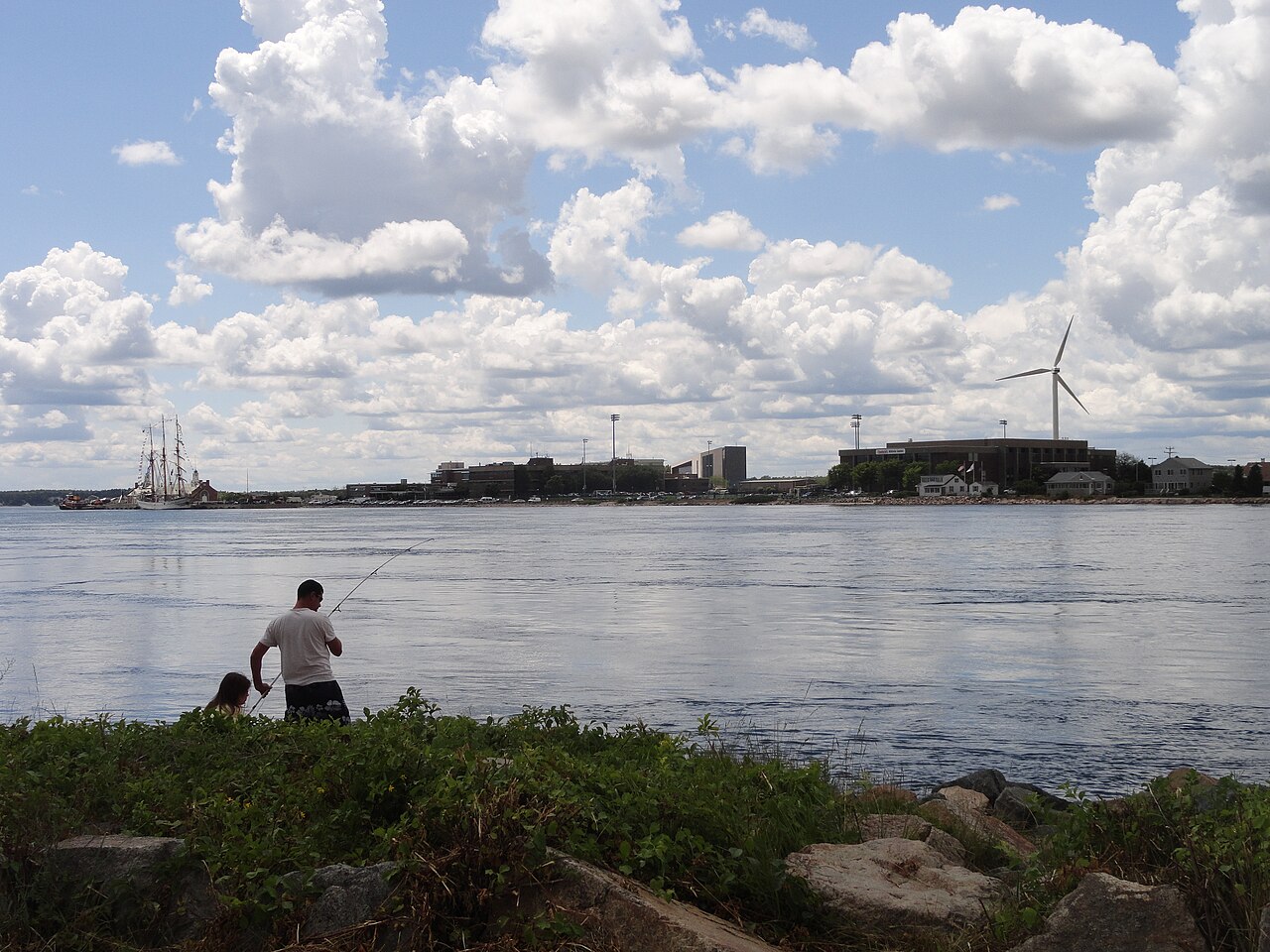
Marinakis has a long-standing relationship with the Academy, having received an honorary doctorate from the institution at its 181st graduation ceremony in June 2024. McDonald described the opening of Marinakis Hall as a historic milestone for the Academy, noting that cadets regardless of their program of study will take STEM courses in the building for decades to come. The hall’s location on campus offers views of both the Academy’s training ship, Patriot State, and its soccer field.
Net-Zero Design and Hands-On Labs
The facility is described by the Academy as its first building with the potential to achieve net-zero energy consumption, and it is the first to be connected to the Academy’s new geothermal heating and cooling system. Beyond classrooms, the centre includes construction and makerspace laboratories, operations and control systems labs, electronics facilities, and specialized laboratories for biology, physics and chemistry. Academy officials characterized the space as entirely hands-on, with invention space and lab work rather than traditional lecture formats.
Supporters of the project said the environmental design choices were intended to model the sustainability practices the maritime industry is increasingly expected to adopt. The combination of applied engineering labs and energy-efficient infrastructure positions the hall as a demonstration project as well as a teaching facility. Academy leadership emphasized that the building’s technical capacity was designed to keep pace with the evolving skills needs of commercial shipping.
Part of a Wider Education and Decarbonisation Push
The donation extends a pattern of engagement by Marinakis with maritime education and environmental initiatives on both sides of the Atlantic. In February 2024 he backed the establishment of the Maritime Emissions Reduction Centre in Athens, a joint effort with Lloyd’s Register focused on cutting shipping emissions, and in March 2025 Capital Clean Energy Carriers Corp. became a founding member of the MIT Maritime Consortium. Capital Maritime Group, which Marinakis controls, managed a mixed fleet of more than 146 vessels in 2025 spanning tankers, container ships, LNG, LPG and ammonia carriers, LCO2 carriers, offshore vessels and dry bulk tonnage.
The Massachusetts Maritime Academy, among the oldest maritime training institutions in the United States, trains licensed deck and engineering officers alongside STEM graduates who enter shipping, offshore energy and related technical sectors. Academy officials said the new hall strengthens ties between the school and the global shipping industry at a time of growing demand for engineers familiar with alternative fuels, automation and emissions-reduction technology. No financial details of the donation were disclosed by either the Academy or Capital Maritime.
Why it matters
The donation underscores how Greek shipowners, who control the world’s largest commercial fleet by tonnage, are increasingly channeling resources into technical education abroad as the industry grapples with a shortage of engineers trained in decarbonisation, automation and alternative fuels. It also reflects a broader trend of Greek shipping capital funding institutions tied to the next generation of maritime technology, following Marinakis’s earlier backing of emissions-reduction research in Athens and participation in the MIT Maritime Consortium. For training academies like Massachusetts Maritime, private shipowner philanthropy is becoming a significant source of capital for modernizing STEM infrastructure needed to prepare cadets for an industry under mounting environmental and technological pressure.
Source: The National Herald