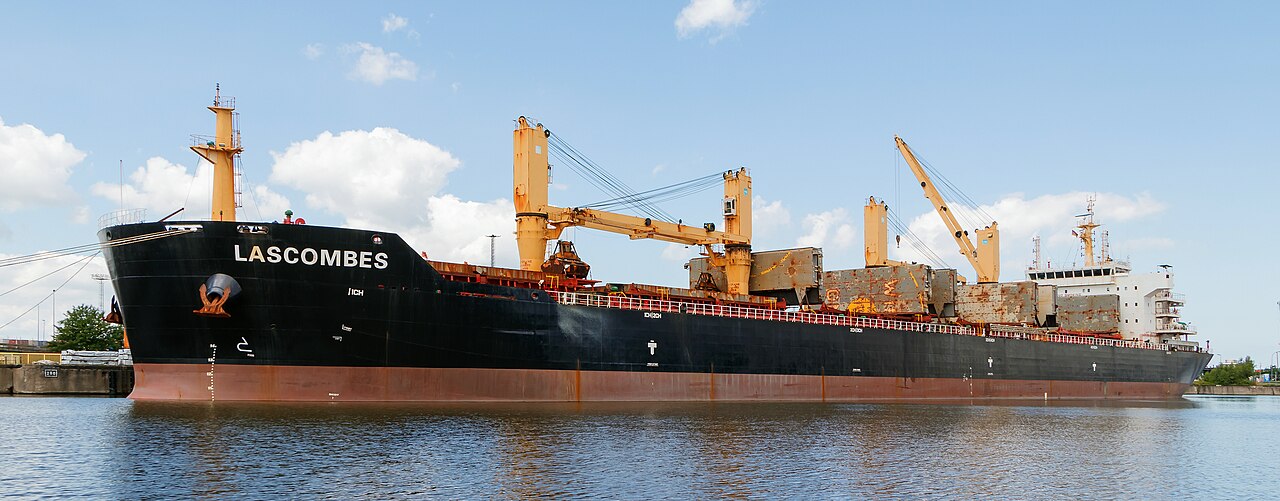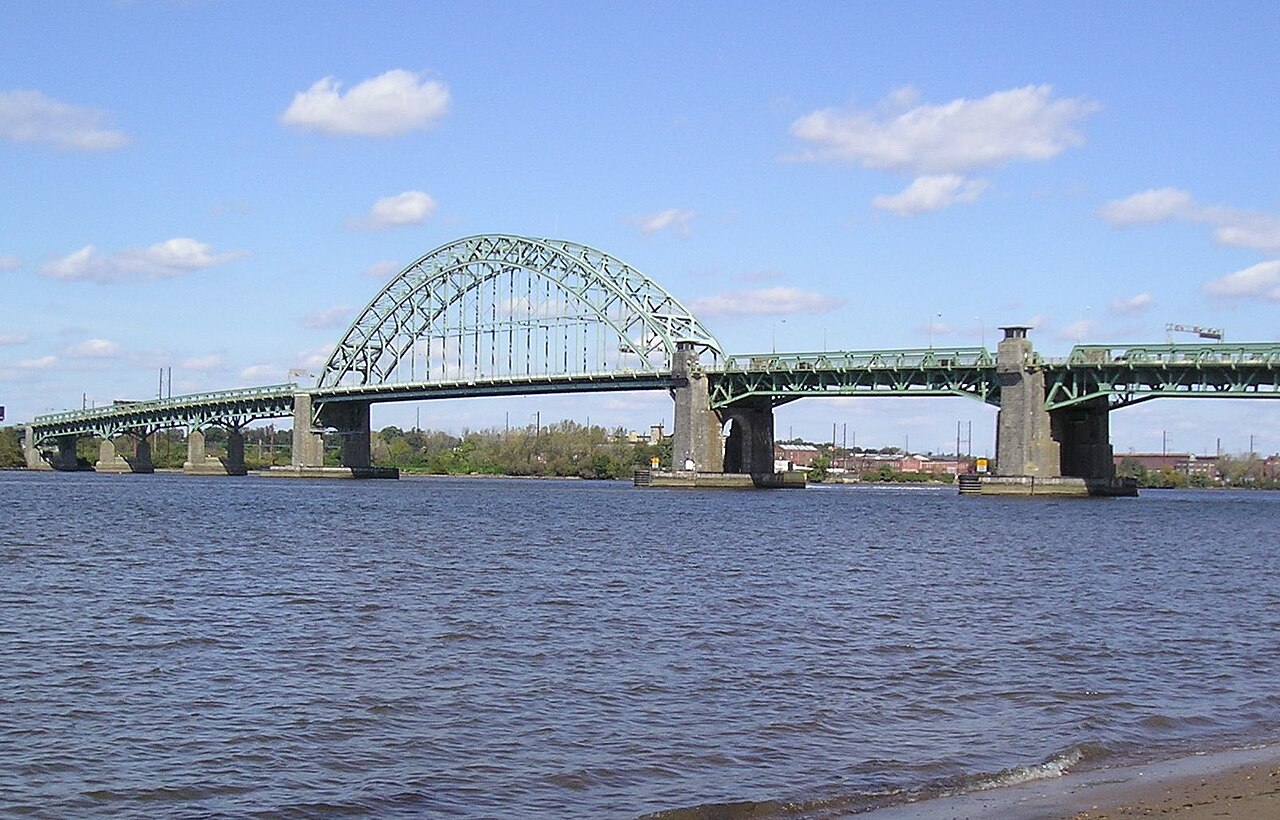
The Singapore-flagged bulk carrier Strategic Alliance struck the Tacony-Palmyra Bridge spanning the Delaware River between Philadelphia and Palmyra, New Jersey, on Thursday afternoon, jamming the structure’s draw span and forcing a lengthy closure to vehicle and pedestrian traffic. The US Coast Guard identified the vessel as a 591-foot handysize bulk carrier built in 2013, which was built in 2013.
The collision occurred at approximately 1:15 p.m. local time while the bridge’s bascule span was open to allow marine traffic to pass, according to the Delaware Bay Coast Guard sector. No injuries were reported among motorists, pedestrians or the ship’s crew, and the vessel subsequently moored at a Kinder Morgan terminal in Bristol, Pennsylvania, where Coast Guard inspectors boarded to assess damage and begin an investigation into the cause.
Collision Jams Historic Span Open
The Tacony-Palmyra Bridge, a combination steel tied-arch and double-leaf bascule structure that opened in 1929, links Pennsylvania Route 73 in Philadelphia’s Tacony neighborhood with New Jersey Route 73 in Palmyra. The span, which carries as many as 76,200 vehicles daily according to 2025 estimates, was unable to close immediately after impact, triggering a prolonged shutdown that rippled across the region’s road network during the evening commute.
Pennsylvania state Rep. Ed Neilson said the impact left the 3,659-foot bridge unable to close, producing a major backup on the Philadelphia side. The crossing reopened to traffic around 8:40 p.m., roughly seven hours after the strike, though one vehicular lane and the pedestrian sidewalk remained closed as repair crews continued structural checks. Inspectors rated the bridge deck as in good condition, with the substructure and superstructure both assessed as fair.
Investigation Opens Into Cause
The Coast Guard said the bascule span had been raised to let another vessel transit the Delaware River when the Strategic Alliance made contact, though the precise cause of the collision remains under investigation. The ship’s owner and operator had not been disclosed by authorities in the immediate aftermath, and the Coast Guard said it would continue assessing both the structure and the vessel for damage.
The Burlington County Bridge Commission, which owns and operates the crossing, did not immediately respond to inquiries as the closure extended into the evening rush. A recorded message at the commission’s offices advised that the bridge remained closed to vehicular and pedestrian traffic until further notice while an update was prepared ahead of peak travel hours.
Echoes of Baltimore’s Key Bridge Collapse
The incident immediately drew comparisons to the March 2024 collapse of Baltimore’s Francis Scott Key Bridge, when the containership Dali, also Singapore-flagged, struck a support pier and brought down the span, killing six construction workers. That disaster prompted a broad US reassessment of bridge protections against vessel allision, including pier fendering and traffic management around waterways carrying heavy commercial shipping.
Unlike the Key Bridge collapse, the Tacony-Palmyra strike caused no structural failure and no casualties, but it has renewed scrutiny of coordination between marine traffic and movable bridge operations on busy US waterways. The Delaware River remains one of the East Coast’s principal commercial shipping corridors, serving refineries, container terminals and bulk cargo facilities around Philadelphia, Camden and southern New Jersey.
Why it matters
The collision underscores persistent vulnerabilities at the intersection of commercial shipping lanes and aging movable bridge infrastructure in the United States, an issue thrust into national focus by the 2024 Key Bridge disaster in Baltimore. Even without structural collapse or casualties, a seven-hour closure of a crossing carrying tens of thousands of daily vehicles demonstrates how a single vessel incident can disrupt regional transport networks far beyond the waterway itself. The episode will likely feed into ongoing US regulatory reviews of bridge-vessel safety protocols, pier protection standards and coordination procedures for drawbridge operations near commercial ports.
Source: Splash247