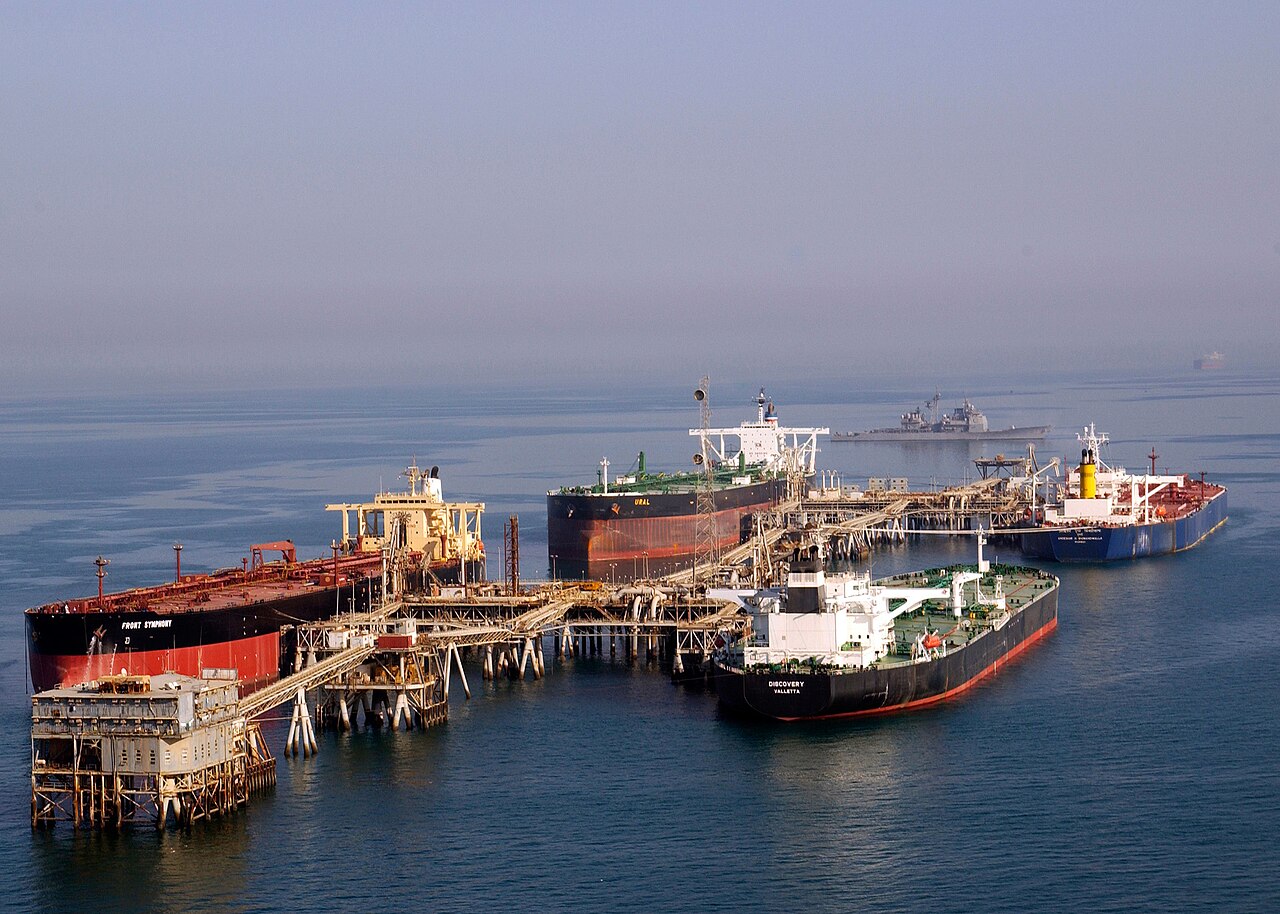
At least two tankers were attacked in the Strait of Hormuz on Saturday, including one that caught fire roughly eight nautical miles off Khasab on Oman’s Musandam Peninsula, according to The Maritime Executive. Crewmembers on the burning vessel were evacuated and no injuries were reported, while firefighting tugs were dispatched to the scene.
Open-source intelligence analysts tentatively identified the burning ship as the Navig8 Messi, a product tanker chartered by Abu Dhabi National Oil Company’s logistics arm ADNOC L&S. The identification has not been independently confirmed, but the vessel was previously struck by drones in August during an earlier escalation of attacks on commercial shipping transiting the strait.
Second Attack on the Same Tanker
The Navig8 Messi, a Singapore-flagged product tanker majority owned by Navig8 and chartered through ADNOC L&S, was first targeted on August 13, when it was struck alongside the Liberian-flagged Aframax Tarif during outbound transits of the strait. The UAE Ministry of Foreign Affairs condemned that earlier strike, saying the attacks targeted vessels affiliated with ADNOC with no injuries reported, and called for Iran to halt hostilities and reopen the waterway.
Following the August strikes, commercial traffic through Hormuz nearly stopped, with only five commodity vessels transiting on one weekend day and none the next, compared with 31 the previous weekend, according to shipping data cited at the time. The latest incident marks the Navig8 Messi’s return to the same trade lane after repairs, only to be struck again in a sign that ADNOC-linked tonnage remains a recurring target.
Saturday’s Twin Incidents
Unverified video footage circulating on social media appeared to show a vigorous cargo fire burning amidships on the tanker near Khasab, with at least two firefighting tugs working to combat the blaze. The United Kingdom Maritime Trade Operations agency separately received a report from a company security officer stating that a different vessel had been hit by a projectile while on an outbound transit of the strait, with all crew reported safe and no environmental impact noted.
CENTCOM, which has maintained a naval blockade enforcement posture in the area, said it had directed crew aboard a separate vessel to abandon targeted spaces prior to a strike it carried out, underscoring the multi-sided nature of the confrontation along the waterway. Maritime security monitors tallied the Khasab-area incident as the latest in a string of attacks concentrated off Oman’s Musandam coast since the start of November.
Chokepoint Under Continued Strain
The Strait of Hormuz, which before the current disruption carried more than 130 vessels a day and roughly a fifth of global crude oil and LNG shipments, has seen repeatedly reduced traffic amid the ongoing hostilities. Trade monitors tracking the region reported several additional tanker incidents in the same window, including vessels struck by unidentified projectiles and explosions reported at the waterline of an outbound VLCC.
Baltic Exchange market reporting described the Khasab fire and a second tanker incident on the same day as part of a broader pattern, noting that this was the fifth reported attack off Oman’s Musandam coast since November 1. Shipowners and charterers continue to face elevated war-risk insurance costs and rerouting decisions as the frequency of strikes complicates transit planning through one of the world’s most critical energy corridors.
Why it matters
The Strait of Hormuz is the conduit for roughly a fifth of the world’s seaborne crude oil and LNG, and repeated strikes on ADNOC-linked tankers like the Navig8 Messi signal that commercial shipping continues to bear direct risk from the Iran-linked conflict even as diplomatic efforts proceed. Each attack adds to insurance, rerouting and crew-safety costs for operators, while sustained disruption to transit volumes threatens to tighten global energy supply chains and keep freight and tanker rates volatile. The recurrence of strikes on a previously hit vessel also raises questions about whether specific charterers or flag registries are being deliberately targeted.
Source: The Maritime Executive