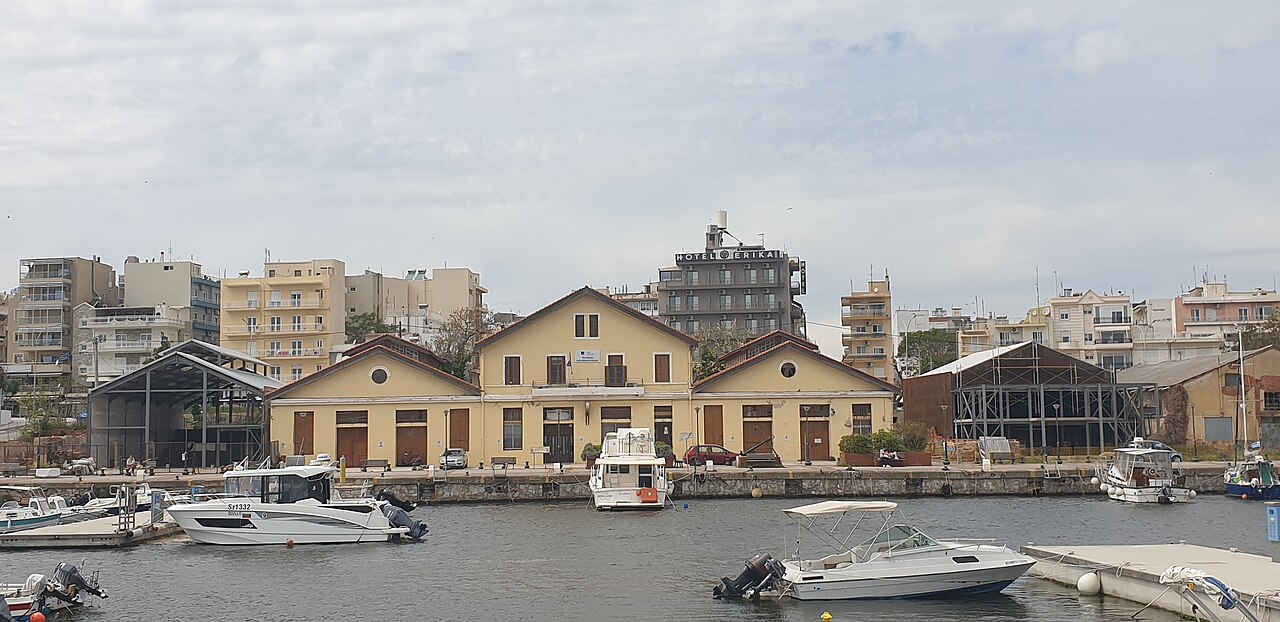
Greece is developing a pilot two-way freight corridor to move Ukrainian grain to international markets through the northern Aegean port of Alexandroupolis, according to a report by Greek newspaper To Vima published November 23. The plan centers on rail transport linking Ukraine to the port, with Thessaloniki also seen as a supporting hub for the country’s maritime export capacity.
The proposal follows a meeting between Greece’s Infrastructure and Transport Minister Christos Dimas and Ukraine’s Deputy Minister for Communities, Territories and Infrastructure Development, Artem Rybchenko, held in September to discuss alternative export routes for Ukrainian grain amid continued disruption to Black Sea shipping.
Corridor Design and Rail Operators
The plan calls for a two-way multimodal freight route between Ukraine and Greece, with the port of Alexandroupolis serving as its central link. A pilot shipment of grain and other cargo is considered feasible by rail with the involvement of Hellenic Train and GFR Hellas, a division of Romanian rail operator GFR.
For the corridor to be commercially viable, freight will need to move in both directions, with planners estimating the railway should be capable of handling two to three freight trains daily from south to north. Alongside grain exports southbound, the route could carry diesel fuel, electrical equipment and construction materials northbound into Ukraine, supporting its wartime supply needs and eventual reconstruction.
Black Sea Disruption and Danube Drought Drive the Shift
The push for an alternative export artery stems from systematic Russian strikes on Ukrainian Black Sea ports combined with falling water levels on the Danube caused by drought, both of which have complicated the movement of large grain shipments. These parallel constraints have increased the strategic value of a northern Aegean route that bypasses the most exposed maritime chokepoints.
Connecting Alexandroupolis with Odesa via Varna in Bulgaria and Constanta in Romania was first proposed by Greek Prime Minister Kyriakos Mitsotakis in June 2025 during a Ukraine-Southeast Europe summit held in Odesa. Greece had previously studied a role in Ukrainian grain exports as far back as 2023, though that earlier initiative did not proceed.
Strategic and Geopolitical Stakes for Athens
Athens is positioning the corridor as part of a broader effort to strengthen Greece’s role within trans-European transport networks connecting Northern and Eastern Europe with the Aegean and Mediterranean seas. Greece, Bulgaria and Romania are separately developing a joint transport corridor intended to link the Aegean and Black Seas with the Danube basin.
Beyond the immediate export logistics, Greek officials view the project as a way to contribute to Ukraine’s eventual post-war reconstruction and to secure an early advantage in regional connectivity planning. The route would rely on existing rail infrastructure including the Alexandroupolis–Svilengrad line, a historic corridor dating to 1873 that links the port to Bulgaria and onward networks.
Why it matters
A functioning Alexandroupolis corridor would give Ukraine a maritime export option outside the contested Black Sea and drought-affected Danube, diversifying grain flows critical to global food security. For Greece, it reinforces Alexandroupolis and Thessaloniki as strategic logistics hubs linking the Aegean to Central and Eastern Europe, leveraging the country’s shipping strength beyond its traditional merchant fleet role. The project also underscores how regional infrastructure is being reshaped around wartime supply chain risks, with implications for freight operators, port investment and EU transport corridor planning.