Hapag-Lloyd announced on November 6, 2026 that it has completed the acquisition of a 25% stake in APM Terminals Maasvlakte II in Rotterdam, following unconditional approval from antitrust authorities. The deal strengthens the German carrier’s terminal portfolio at one of Europe’s most automated container facilities and deepens its operational ties with Maersk, which retains a 75% stake and day-to-day operational control.
The transaction, managed through Hapag-Lloyd’s Hanseatic Global Terminals (HGT) division, secures long-term access to handling capacity at a terminal that serves as a key European hub for the Gemini Cooperation, the vessel-sharing partnership between the two carriers. Financial terms of the deal were not disclosed.
Deal Details and Terminal Expansion
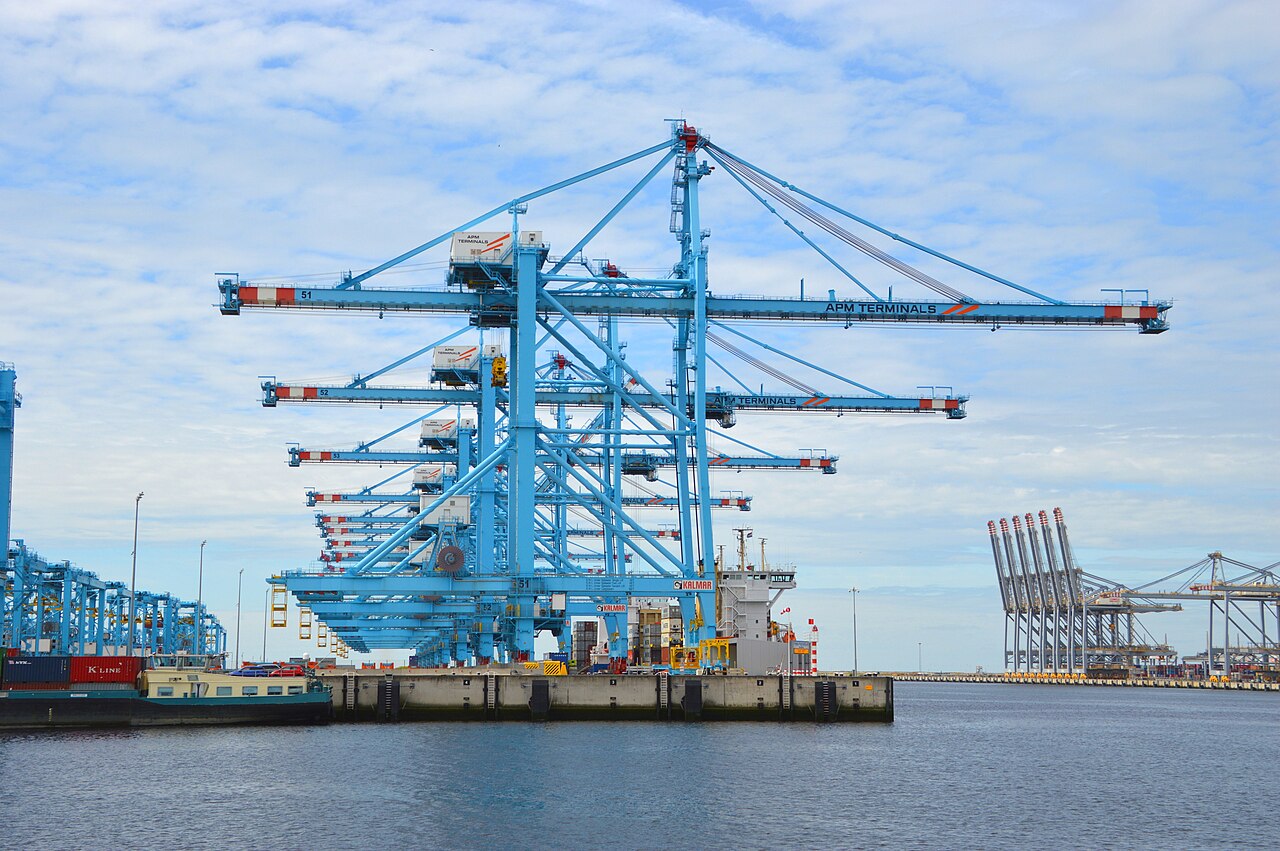
Maasvlakte II began operations in 2015 as a fully automated container terminal and has since become one of the most advanced facilities of its kind. The terminal is currently undergoing a major expansion that will add 1,000 metres of deep-sea berth, bringing the total to 2,000 metres, alongside additional yard space, four new rail tracks and further automated equipment including terminal tractors.
Once the expansion is complete, annual handling capacity at Maasvlakte II is expected to rise toward 5.4 million TEU. The Port of Rotterdam Authority has also been widening the Yangtzekanaal, the waterway serving both APM Terminals Maasvlakte II and the neighboring Rotterdam World Gateway, to allow two-way traffic for containerships of up to 24,000 TEU as both facilities grow.
Strategic Rationale for Both Carriers
Maasvlakte II functions as a critical European gateway for the Gemini Cooperation, the hub-and-spoke network alliance launched by Maersk and Hapag-Lloyd in February 2025 to improve schedule reliability. By taking an equity stake rather than relying solely on a commercial handling agreement, Hapag-Lloyd secures more predictable, long-term access to automated capacity at a facility central to its transatlantic and Asia-Europe strings.
Dheeraj Bhatia, Hapag-Lloyd’s chief terminal and infrastructure officer and chief executive of Hanseatic Global Terminals, said the company was pleased to have completed the transaction and become a shareholder in Maasvlakte II. Harold Kunst, managing director of APM Terminals Maasvlakte II, said Hapag-Lloyd’s participation would support the terminal’s long-term growth while operations continue to serve all customers calling at the facility, not only Gemini-aligned services.
Wider Terminal Portfolio Ambitions
The Rotterdam investment fits into Hapag-Lloyd’s broader 2030 strategy, under which the carrier aims to become a leading global terminal operator with a portfolio of approximately 30 terminal investments worldwide. Hanseatic Global Terminals, established in 2023 as an independent entity within the Hapag-Lloyd Group, already holds equity stakes in 24 marine terminals across Europe, Latin America, the United States, India and North Africa, supported by roughly 4,400 employees in the Terminal and Infrastructure segment.
For Maersk, retaining 75% ownership and operational control preserves its position as lead operator at Maasvlakte II while bringing in a committed alliance partner to help finance the terminal’s capacity expansion. The arrangement mirrors a broader industry trend of carriers taking minority equity positions in strategically important terminals to lock in capacity amid continued newbuilding deliveries and fleet growth across the container sector.
Why it matters
The deal illustrates how major container lines are increasingly using terminal equity stakes, rather than pure commercial contracts, to secure reliable capacity at critical European gateways as vessel sizes and alliance networks grow. For Rotterdam, continued investment from two of the world’s largest carriers reinforces the port’s role as a primary Northern European hub amid competition from other North Sea gateways. The transaction also signals deepening integration within the Gemini Cooperation beyond vessel-sharing into shared infrastructure, a model that could shape how other alliances approach terminal access in the coming years.
Source: gCaptain