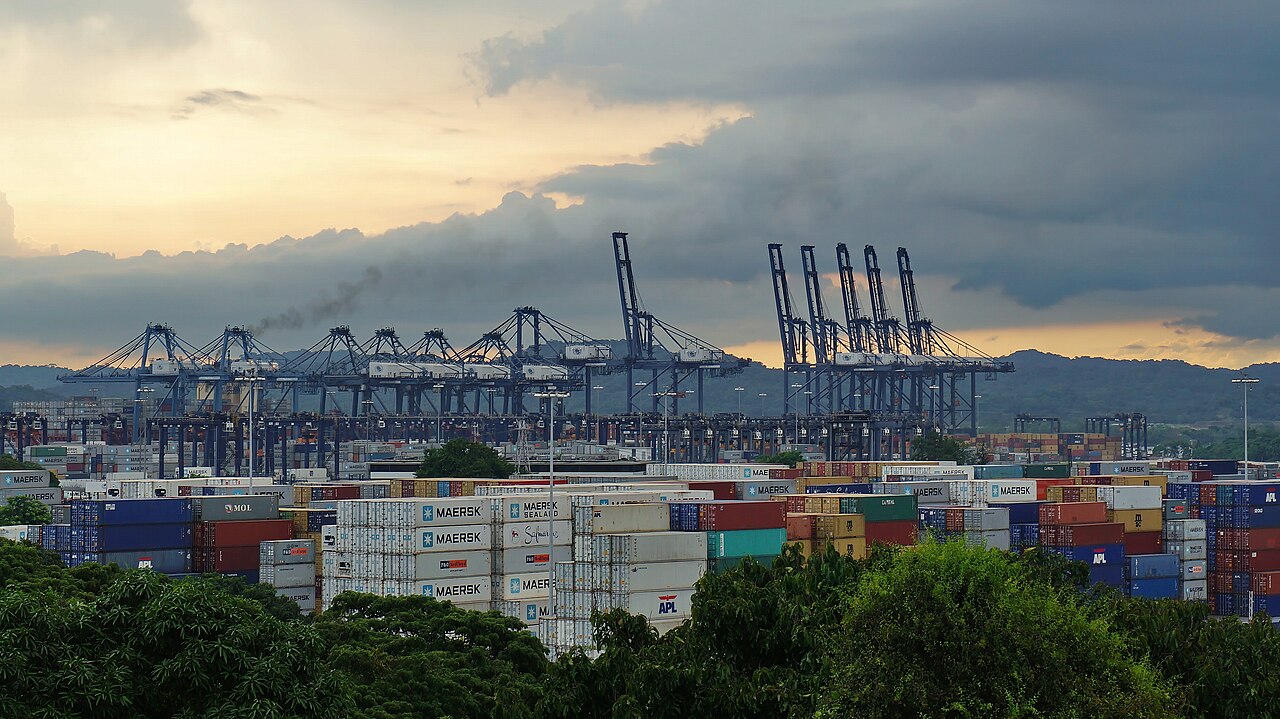
APM Terminals, the port operating arm of Danish shipping group A.P. Moller-Maersk, has told Panamanian authorities it wants to continue managing the Pacific-side Port of Balboa once its current interim contract expires, according to a report published November 4. The company took over interim management of Balboa after Panama terminated the nearly three-decade concession held by Hong Kong-based CK Hutchison.
The move comes as Panama works toward a long-term international tender for Balboa and the Atlantic-side Port of Cristóbal, both of which sit at the entrances to the Panama Canal and together handle a large share of the isthmus’s container traffic. Maersk’s position sets up competition for permanent control of terminals that have become a flashpoint in broader US-China tension over strategic shipping infrastructure.
From Concession Fight to Interim Control
Panama’s Supreme Court declared the concession held by CK Hutchison subsidiary Panama Ports Company unconstitutional, and on February 23, 2026 the ruling was published in the official gazette, finalizing the annulment of contracts covering Balboa and Cristóbal that CK Hutchison had operated for more than two decades. The publication cleared the way for APM Terminals to take over on a temporary basis.
Under temporary licenses approved by Panama’s government, APM Terminals Panama began operating Balboa while Terminal Investment Limited, the terminal arm of Mediterranean Shipping Company, took charge of Cristóbal. Panama’s labor minister pledged there would be no layoffs among the roughly 1,200 staff across both terminals during the transition.
Arbitration and Compensation Dispute
CK Hutchison has pursued international arbitration against Panama over the termination, with the dispute stemming directly from the government’s move to end the Panama Ports Company concession. Panama’s government has authorized hiring the law firm Hogan Lovells Cadwalader for 3.8 million dollars to defend the state in the arbitration proceedings.
On February 23, the Panamanian state took control of the Balboa and Cristóbal terminals, including property, equipment, technology, employees and documents, without offering compensation to CK Hutchison. The transitional contracts governing APM Terminals’ and TIL’s interim management are set to expire in July 2027, giving Panama a fixed window to complete a new tender process.
Stakes for Canal-Adjacent Trade
Balboa and Cristóbal together handle roughly 3.8 million TEU annually, representing close to 40 percent of Panama’s total container throughput, underscoring why control of the two terminals carries outsized weight for regional trade flows. Both ports serve as critical transshipment and gateway points for cargo moving to and from the Panama Canal.
Panama’s government is preparing separate tenders of 25 to 30 years for the two terminals, which it hopes to award before mid-2027, ahead of the expiry of the current transitional arrangements. Maersk’s stated intention to remain at Balboa signals it will compete for the long-term concession, setting up a contest that could also draw interest from MSC and other global terminal operators once the formal tender process opens.
Why it matters
Balboa and Cristóbal sit at the two entrances to the Panama Canal and handle a substantial share of Panama’s container volumes, making their long-term operator a matter of strategic consequence for transpacific and transatlantic supply chains. The termination of CK Hutchison’s concession and the resulting arbitration have already become entangled in broader US-China friction over control of ports near the canal. How Panama structures its upcoming tender, and whether Maersk secures permanent control of Balboa, will shape competitive dynamics among the world’s largest terminal operators at one of global shipping’s most important chokepoints.
Source: Seatrade Maritime News