A Maersk-operated containership brought down a ship-to-shore crane at China’s Yantian port on November 9 after striking the structure while berthing, Chinese social media footage and multiple shipping outlets showed. The 15,516 TEU Maersk Cincinnati hit the crane at berth 12 of the Shenzhen terminal at around noon local time, causing it to collapse toward the adjoining container yard.
No injuries have been reported, and neither Maersk nor the terminal operator had given a detailed account of the incident as of the latest reports. The vessel, which was operating voyage 645W on the Gemini Cooperation’s Asia-North Europe NE3 service, remained alongside at Yantian for several days following the collision, raising concerns about knock-on delays to the jointly operated Maersk-Hapag-Lloyd network.
Incident Details and Possible Cause
The Maersk Cincinnati, a Singapore-flagged vessel built in 2024, measures 366 metres in length with a 51-metre beam and carries the IMO number 9936410. The ship struck the quay crane while manoeuvring into berth 12 at the Yantian terminal in Shenzhen, with images circulating on Chinese social media showing sections of the collapsed structure lying alongside the hull and extending into the stacked container yard.
Strong winds are suspected as a contributing factor. Shenzhen’s meteorological authorities had issued a monsoon warning at 6:10 a.m. on the day of the accident, forecasting gusts of force 8 or above for Yantian and surrounding waters. Chinese shipping sources pointed to sudden gusts during the berthing manoeuvre, though the precise cause of the collision has not been officially established and remains under investigation by Shenzhen’s Yantian District Emergency Management Bureau.
Operational Fallout at a Key Transshipment Hub
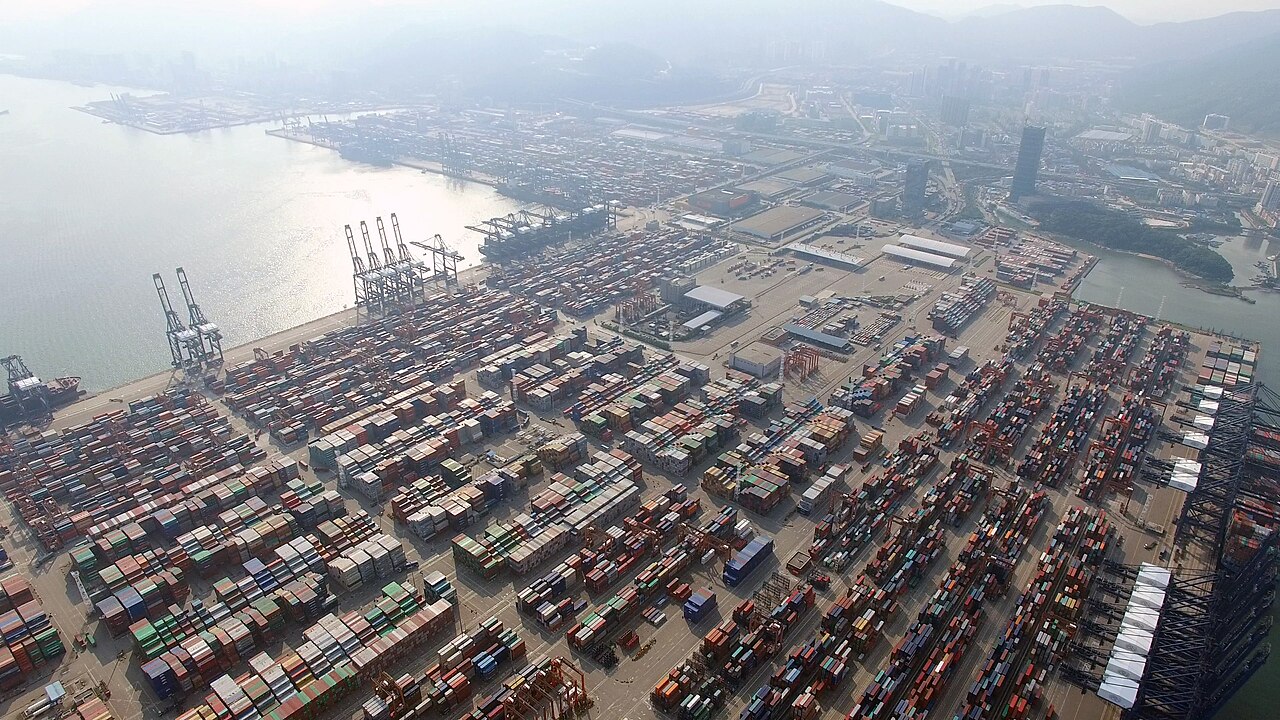
Yantian is one of the busiest container terminals in southern China and a critical node for export cargo bound for Europe and North America. Operations at berth 12, which handles ultra-large container vessels, were suspended following the collision, with the disruption also affecting container pick-up, empty container returns and yard-stacking activity at the facility.
The Maersk Cincinnati had been scheduled to depart Yantian on November 11 for Ningbo and Shanghai before continuing to Tanjung Pelepas in Malaysia and onward toward Europe. The vessel remained alongside for several days after the incident, and the disruption is expected to affect subsequent calls on the NE3 service, a joint Maersk-Hapag-Lloyd route within the Gemini Cooperation alliance, potentially resulting in schedule delays for Asia-Europe cargo movements.
Second Crane Collapse at Yantian Since 2024
This is not the first time a quay crane has collapsed at the Yantian terminal. In September 2024, a crane fell onto the 1,730 TEU MSC Riona at berth two, temporarily halting operations without causing injuries. The recurrence of such incidents at one of China’s major export gateways has drawn renewed attention to berthing procedures and crane safety protocols during periods of severe weather.
The Gemini Cooperation, the alliance under which the Maersk Cincinnati was sailing, links Maersk and Hapag-Lloyd on key East-West trades and has been steadily normalizing Asia-Europe routings as traffic patterns adjust following earlier Red Sea disruptions. Neither carrier had issued a formal statement on repair timelines or the extent of damage to the vessel or cargo as of the latest reporting, leaving the full commercial impact on the service unresolved.
Why it matters
Yantian ranks among the busiest container gateways in southern China, and any prolonged closure of a berth capable of handling ultra-large vessels can ripple through tightly scheduled alliance networks like Gemini Cooperation. Repeated crane incidents at the same terminal within roughly two years raise questions about berthing safety margins during adverse weather, a growing concern as carriers deploy ever-larger vessels. Delays stemming from the collision could compound existing pressure on Asia-Europe container schedules already affected by capacity and routing adjustments across major alliances.
Source: Splash247