Container lines accelerating their return to the Suez Canal route are causing mounting congestion at major northern European ports, with some carriers discharging UK-bound boxes at continental hub ports instead of their scheduled destinations, UK freight forwarder Davies Turner said on November 27.
According to Alphaliner data cited in industry reports, 63 percent of Far East-Europe container capacity had returned to the Suez Canal for at least one leg of the voyage as of October 21, up sharply from the near-total diversion around the Cape of Good Hope that followed Houthi attacks on Red Sea shipping. The resulting overlap of vessels using the shorter Suez route with those still completing longer African diversions has produced bunching at berths in Rotterdam, Antwerp-Bruges and Felixstowe, disrupting delivery schedules heading into the pre-Christmas peak.
Carriers Recover Schedules at UK Ports’ Expense
Tony Cole, Director of Ocean at Davies Turner, said the return of vessels to Suez is creating a concentration of arrivals at key European ports as ships that previously diverted around the Cape of Good Hope catch up with those using the shorter route. He said some shipping lines have discharged UK-bound containers at European hub ports rather than their originally scheduled UK destinations, although carriers have committed to recovery plans to move the affected containers on to their booked UK ports.
The disruption adds complications for shippers, who must navigate European customs requirements, upfront payment of release charges, and the obligation to return empty containers to the mainland European port where cargo was diverted, alongside potential demurrage and detention costs. Davies Turner noted the situation is also adding pressure on UK haulage operations as freight is rerouted by feeder vessel to its intended destination.
Capacity Returns Faster Than Ports Can Absorb
The Suez routing cuts sailing times by ten to fourteen days to northern European ports and seven to ten days to the first Mediterranean ports compared with the Cape of Good Hope diversion, giving carriers strong commercial incentive to return despite the near-term disruption. Maersk and Hapag-Lloyd have confirmed their AE19/SE4 and ME1 services will transfer to the Suez route, joining Gemini Cooperation services already using the shorter path, while MSC has already completed the return of its Asia-Northern Europe services.
Freight analytics firm Flexport has estimated that northern European ports faced arrivals exceeding 131 percent of normal ocean freight capacity in mid-November, with roughly 40 percent of that volume arriving via Suez, and has flagged further weeks through January at risk of breaching its 120 percent congestion threshold. Logistics provider DSV’s monthly maritime transport report anticipates a full return to normal Suez Canal service patterns during the first quarter of 2027, contingent on how security conditions in the Red Sea evolve.
Pressure Mounts Ahead of Peak Season
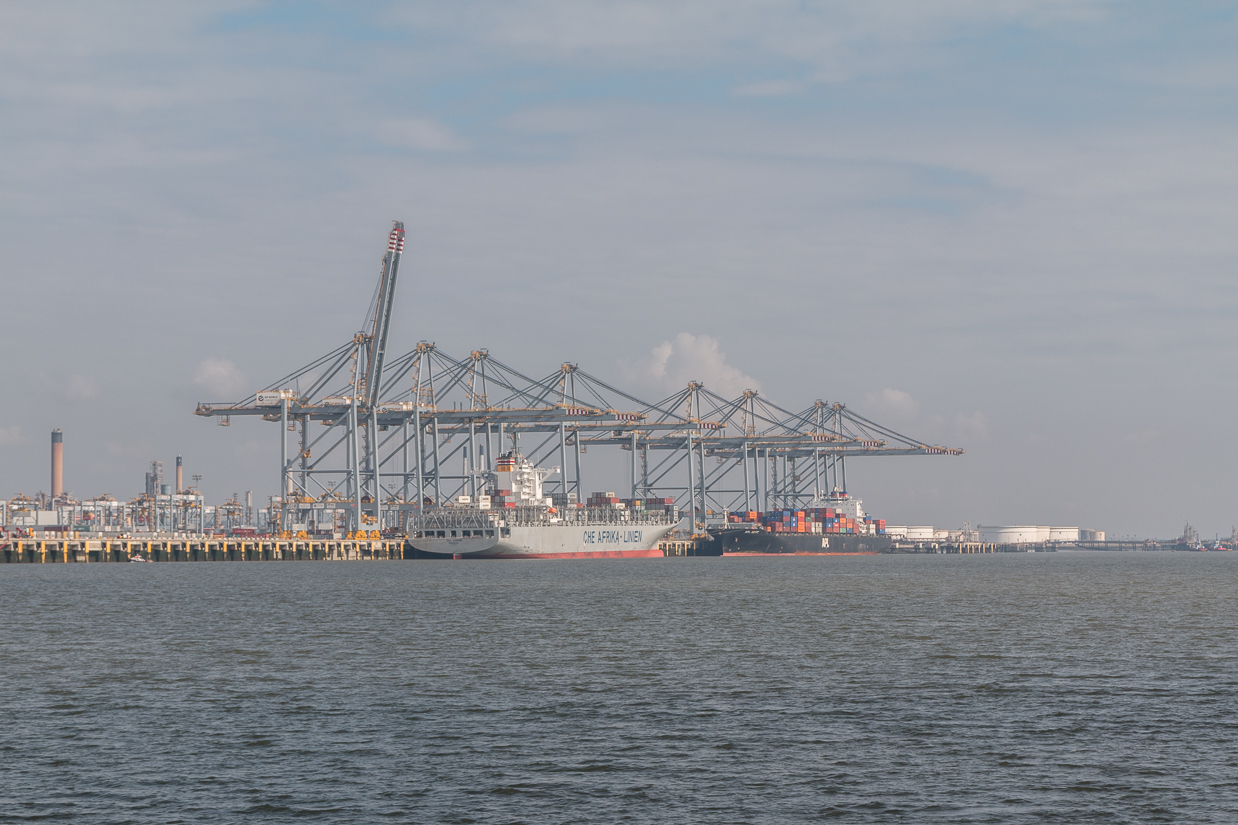
Congestion is compounding existing strain at the UK’s three principal container ports, with London Gateway, Felixstowe and Southampton all reporting operational challenges over the past two to three weeks, according to industry sources. The timing is particularly sensitive, with carriers and shippers racing to clear backlogs before the holiday shipping season intensifies further.
Industry forwarders have warned that missed vessel connections and delivery delays carry heightened risk for time-sensitive and refrigerated cargo moving through the affected hub ports. Restrictions on empty container returns at diversion ports are also complicating haulage planning for logistics providers managing the knock-on effects of rerouted boxes.
Why it matters
The congestion illustrates how the container shipping industry’s long-anticipated return to the Suez Canal, after roughly two years of Red Sea diversions, is proving operationally disruptive even as it restores shorter and cheaper Asia-Europe transit times. Northern European hub ports are absorbing a temporary bottleneck as vessel schedules realign, with knock-on effects for UK importers, haulage capacity and peak-season delivery reliability. The episode underscores the fragility of global liner networks recalibrating simultaneously around a single chokepoint after an extended period of rerouting.
Source: Cyprus Shipping News