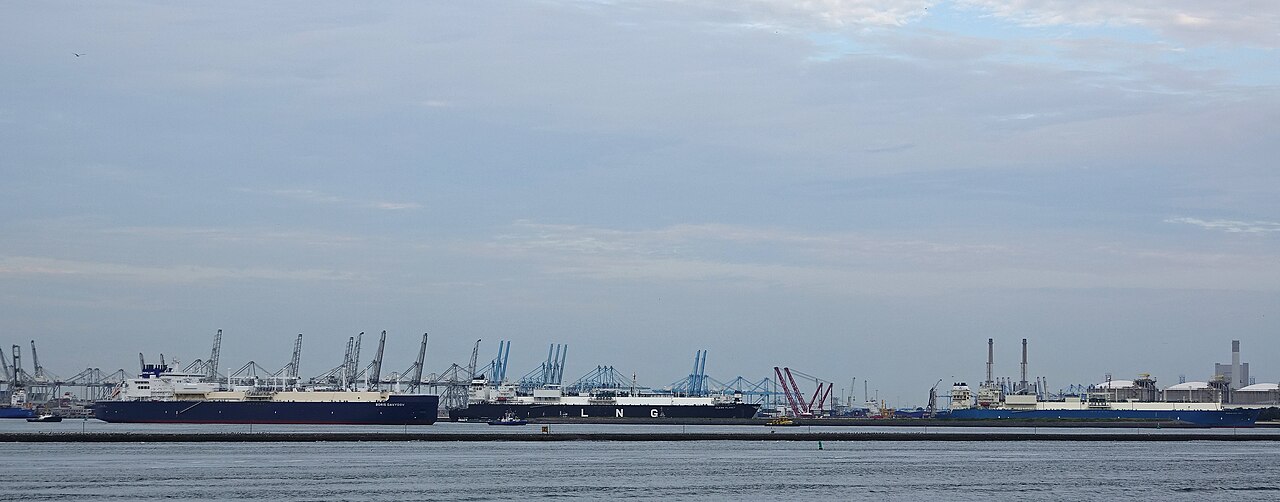
The Greek-flagged LNG carrier Maran Gas Mystras, controlled by the Angelicoussis Shipping Group, was struck by an unidentified projectile while leaving the Strait of Hormuz, Greece’s Ministry of Shipping and the vessel’s manager, Maran Gas Maritime, confirmed this week.
All 30 crew members aboard, including 11 Greek nationals, were reported safe, and the vessel continued under its own power toward the Fujairah anchorage in the United Arab Emirates. The incident marks the second strike on a Greek-linked vessel in the Strait within days, following an October 4 attack on the Dynacom-managed tanker Lipsi.
Vessel Struck Near Waterline While Exiting Strait
The Maran Gas Mystras, with IMO number 9658238, was built in 2015 and sails under the Greek flag. The 294-metre vessel has a deadweight of about 89,269 tonnes and an LNG capacity of roughly 159,800 cubic metres, and is classed by Lloyd’s Register. Its registered owner is Blueskies Shipping Company Ltd, while Maran Gas Maritime acts as manager, with the ship forming part of the Angelicoussis group’s extensive LNG fleet.
According to initial reports from Greece, the projectile struck the vessel around the waterline on Sunday, with smoke subsequently observed coming from the ship. The vessel nevertheless remained operational and continued the voyage under its own power. Maran Gas later confirmed that the vessel and crew were safe, that the LNG carrier remained fully operational, and that there was no report of pollution or damage affecting its operation. The origin and type of the projectile have not been independently established.
Latest in a Week of Escalating Hormuz Attacks
The strike comes amid the most intense wave of attacks around the Strait of Hormuz since the Iran war began, following the collapse of diplomatic talks between Iran and the United States on the sidelines of the UN General Assembly on September 29. The Maran Gas Mystras becomes the 13th vessel struck since that date, according to a tally of incidents reported by the UK Maritime Trade Operations (UKMTO), which has also recorded strikes on 11 tankers and one LPG carrier in the same period, including the October 4 attack on the Lipsi, managed by George Prokopiou’s Dynacom.
As of Monday morning, the incident had not yet appeared on the International Maritime Organization’s list of confirmed Middle East shipping incidents, which was last updated on October 5 and recorded 93 confirmed incidents in the region, including the Lipsi strike, but not yet the Maran Gas Mystras. Ambrey has nonetheless confirmed the incident, though no further details on the exact location or timing were immediately available.
Rates Surge as Owners Weigh Transit Risk
Tanker spot rates have reached as much as $1.2 million per day in some trades through the Strait, while reports suggest shipowners are paying seafarers substantial bonuses for voyages through the Gulf as insurance and security costs rise. There are signs that Iran’s campaign against US-protected oil carriers is dampening shipowners’ appetite for the lucrative but increasingly risky crossings, with a UKMTO count, partly based on US Navy data, showing Hormuz transits falling slightly in the week to September 30.
The attacks come despite evidence that oil flows through the strait had been recovering in recent weeks, with Reuters reporting rising volumes during September and LNG shipments reaching their highest levels since February. US Energy Information Administration data show the scale of the broader disruption, with oil flows through Hormuz dropping from 21.6 million barrels per day in the fourth quarter of 2025 to 14.9 million barrels per day in the first quarter of 2026, before falling further still this year.
Why it matters
The strike on a major Angelicoussis group LNG carrier underscores that Iran’s campaign against shipping in the Strait of Hormuz is no longer confined to smaller or sanctioned-linked tankers but is now reaching flagship Greek tonnage central to global gas supply. With 13 vessels hit in little over a week and transit numbers already softening, the escalation threatens to further tighten LNG and crude availability, push freight and insurance costs higher, and test the resolve of Greek shipowners who operate one of the world’s largest merchant and LNG fleets through the chokepoint.
Source: TradeWinds