All 19 crew members of the Liberian-flagged LPG carrier Gas Husky were rescued after the vessel was struck and sank early Tuesday in the Black Sea within Bulgaria’s exclusive economic zone, authorities and the ship’s Greek management company said.
The vessel, managed by Athens-based Stealth Maritime Corporation S.A. and forming part of the StealthGas fleet associated with shipowner Harry Vafias, was sailing from Alexandria, Egypt, to Midia, Romania, with a cargo of liquefied petroleum gas when it went down roughly 50 nautical miles east of the Bulgarian town of Byala. Romanian maritime authorities said they suspected a drone strike, though Bulgarian officials had not confirmed the cause of the casualty as of the latest statements.
Vessel Struck While Sailing to Romania
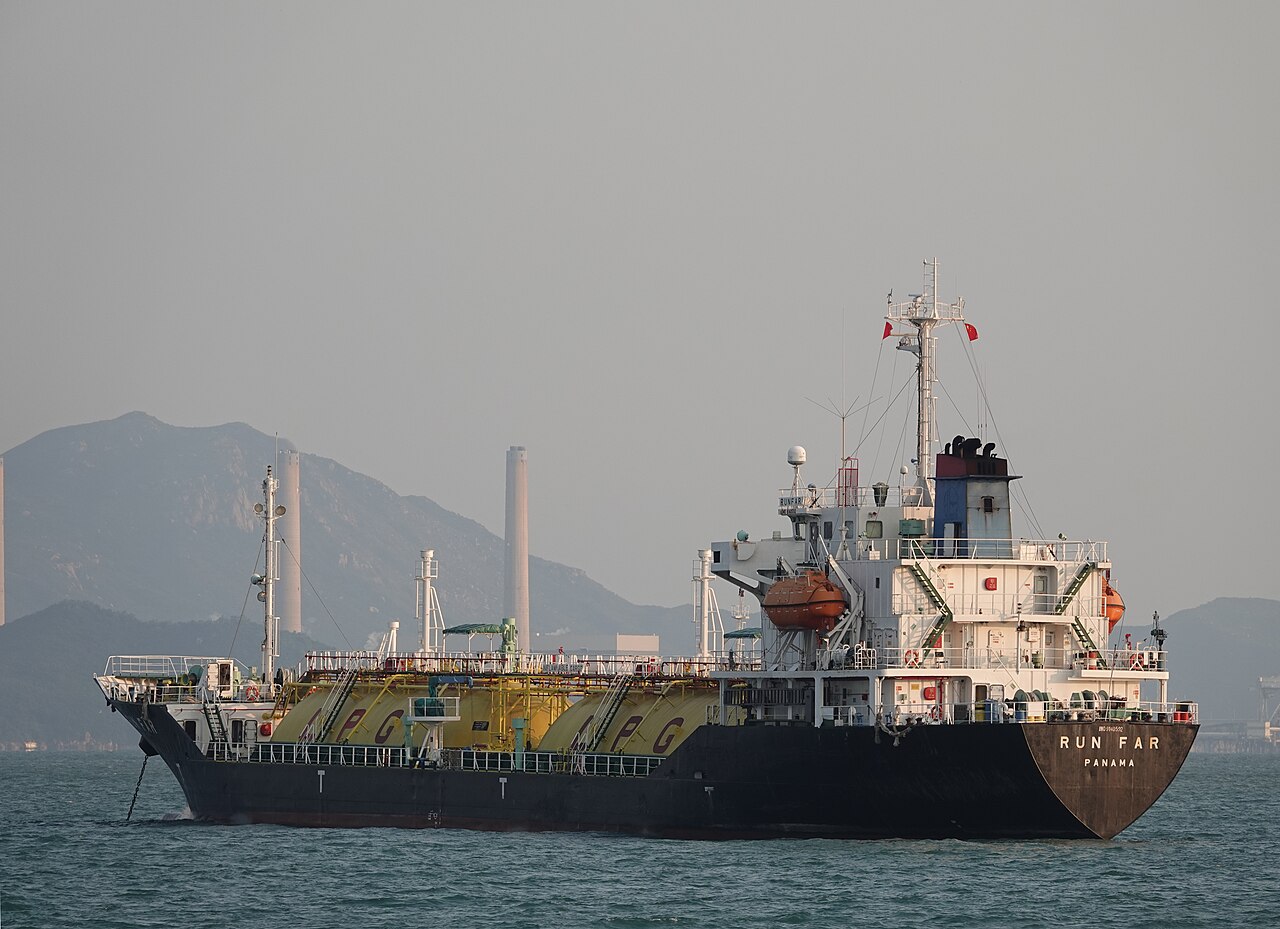
Bulgaria’s Transport Ministry said Gas Husky disappeared from radar shortly after midnight on Tuesday, with its emergency beacon, which the ministry described as a signal indicating a vessel has sunk, activating at 8:02 a.m. local time. The 2012-built, 7,218-deadweight-tonne pressurised carrier was constructed at Japan’s Kanrei Shipbuilding and was registered to owner Octopus Gas Inc, with Stealth Maritime handling ship and commercial management from Athens.
In its first statement, Stealth Maritime said the vessel had been struck early that morning while sailing within the Bulgarian exclusive economic zone and that the ship’s condition remained unknown at the time. The ministry said Gas Husky was carrying approximately 3,400 tonnes of LPG loaded in Alexandria and bound for discharge at Midia. Air force units later located the vessel capsized in the water.
Crew Rescued in Multinational Operation
Bulgarian authorities launched a search and rescue operation after the distress signal, deploying military aircraft and a Cougar helicopter once a life raft carrying the crew was located roughly 300 meters from the wreckage. Two crew members were taken to hospital with minor injuries, while the remainder were reported in good condition; all 19 were flown by helicopter to the Chaika air base in Varna.
Stealth Maritime confirmed that all 19 crew members, reported by Bulgarian officials to be Filipino nationals, had been rescued and taken to Varna, adding it was in close contact with them and their families. The company said its first priority was the crew’s welfare and expressed gratitude to the Bulgarian Air Force and all authorities involved in the rescue response.
Latest in String of Black Sea Incidents
The strike on Gas Husky came roughly 24 hours after a Somali-flagged general cargo ship sank in Bulgaria’s exclusive economic zone in the Black Sea on Monday, about 40 nautical miles southeast of Cape Kaliakra. The back-to-back casualties have put the international shipping community on alert over conditions in the western Black Sea, an area where commercial traffic has faced repeated disruption.
The incident marks the latest in a series of similar episodes in the region believed to be linked to Russia’s invasion of Ukraine, which has periodically drawn merchant vessels into the orbit of drone and mine threats along Black Sea shipping lanes. For Greek shipping, the case is notable for involving a vessel managed by a prominent Piraeus-area operator and renews attention on crew safety, insurance exposure and route risk for LPG carriers transiting the corridor between Black Sea and Mediterranean ports.
Why it matters
The sinking underscores the persistent danger facing merchant shipping in the western Black Sea, where repeated strikes tied to the Ukraine war have hit vessels regardless of flag or ownership. It is also a direct hit on Greek maritime interests, involving a carrier managed by an Athens-based operator and crewed entirely by seafarers whose safety depends on increasingly strained search-and-rescue coordination among Bulgaria, Romania and Turkey. The incident is likely to intensify scrutiny of insurance costs, routing decisions and naval escort arrangements for gas and oil cargoes moving through the corridor, with implications for freight rates and crewing confidence on Black Sea trades.
Source: Splash247