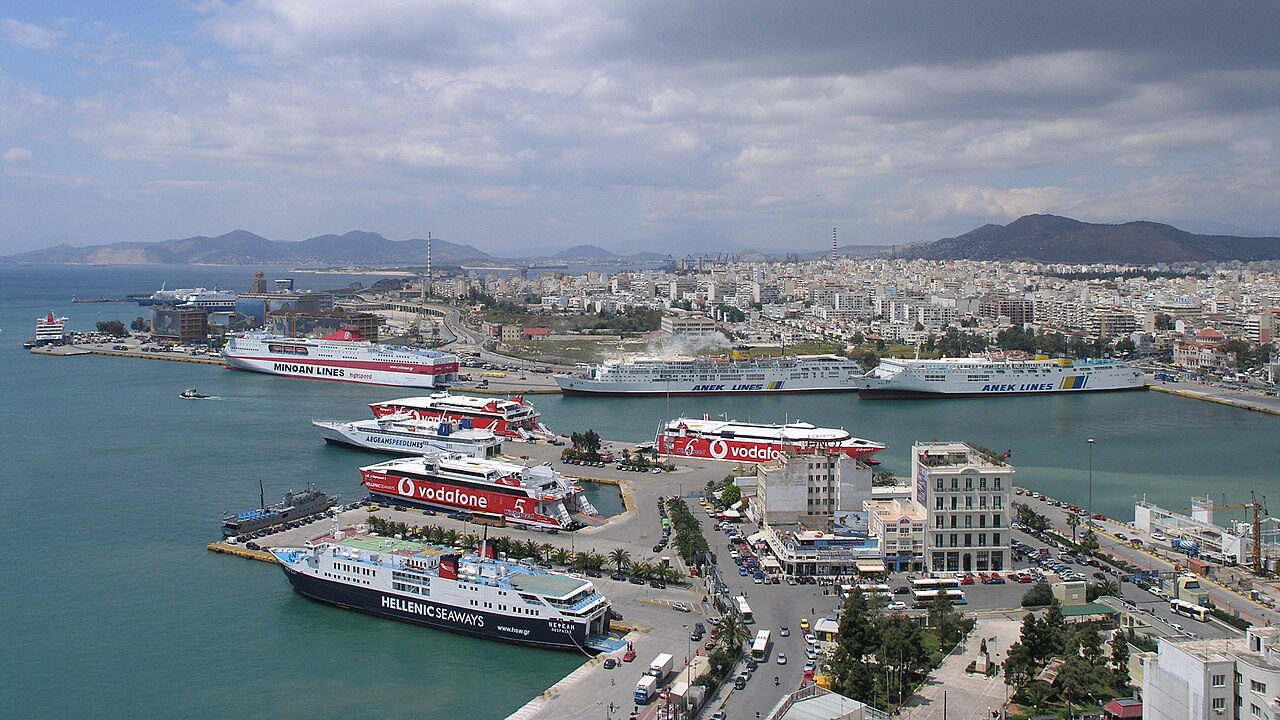
Hong Kong’s government and the Piraeus Port Authority signed a memorandum of understanding on November 16 to establish a green shipping corridor between the two ports, marking the first such partnership between Hong Kong and a European port. The agreement was announced by Hong Kong Chief Executive John Lee at the opening of Hong Kong Maritime Week 2026 and the sixth World Maritime Merchants Forum.
The MOU was formally signed by Hong Kong’s Secretary for Transport and Logistics, Mable Chan, and Han Chao, chairman of the Piraeus Port Authority. The deal designates Piraeus, which is majority-owned by China COSCO Shipping, as Hong Kong’s official partner port in Europe and commits both sides to a phased roll-out of port-side green infrastructure and emissions-reduction measures.
Corridor Part of Wider Hong Kong Green Push
The Piraeus agreement was one of three port-related memoranda Hong Kong signed on the opening day of Maritime Week, alongside a partner-port pact with Hainan’s Yangpu Port and a deal with Zhanjiang in Guangdong to create Hong Kong’s first domestic green energy corridor. Hong Kong officials said the Zhanjiang link is intended to connect mainland green fuel production bases to Hong Kong’s bunkering hub, with the new Piraeus corridor extending that supply chain to European markets.
Hong Kong also formed a task group of industry experts just before the signing ceremony to design a green fuel trading platform, which will advise on strategy, infrastructure and operating rules. Financial Secretary Paul Chan told the Hong Kong Global Maritime Trade Summit that mainland China accounts for roughly 60 percent of the world’s operating green methanol production capacity, underscoring the rationale for linking Hong Kong’s bunkering ambitions to mainland fuel supply and onward to Piraeus.
Incentives and Infrastructure Commitments
Under the corridor framework, a joint incentive scheme is planned to offer port-fee discounts and priority berthing to shipping lines that meet agreed emissions-reduction targets calling at either port. Hong Kong’s broader Action Plan on Green Maritime Fuel Bunkering sets a target for 7 percent of Hong Kong-registered vessels to run on green maritime fuels by 2030, a goal officials linked to the new corridor’s development.
Hong Kong’s Chief Executive said the collaboration represents a significant step in driving decarbonization along major Asia-Europe trade lanes, framing Piraeus’s selection as a recognition of its role as a gateway linking Chinese-operated terminal capacity with European markets. Industry figures at the forum, including the International Association of Classification Societies’ chair, Alex Gregg-Smith, described the corridor launch as a starting point requiring further work with other ports to expand green fuel availability.
Piraeus’s Expanding International Role
The corridor announcement comes as Piraeus Port Authority has been actively promoting its international partnerships, having also participated in the China International Import Expo in Shanghai earlier this month, an event that coincided with the tenth anniversary of COSCO Shipping’s strategic investment in the port. PPA has said it remains focused on upgrading infrastructure and strengthening Piraeus’s position as a transshipment hub for the wider region.
Piraeus’s designation as Hong Kong’s first European green corridor partner reinforces the port’s standing within COSCO’s global network, which also includes the Chinese ports of Shanghai, Qingdao and Zhanjiang now added to Hong Kong’s expanding partner-port roster. No specific timeline for phased infrastructure deployment at Piraeus was disclosed alongside the signing.
Why it matters
The agreement extends green shipping corridor cooperation, a concept promoted globally to coordinate zero-emission fuel supply and port infrastructure, to one of the busiest transshipment hubs linking Asia and Europe. For Piraeus and its COSCO-led operator, the deal strengthens the port’s role as a bridge between Chinese green fuel production and European demand, potentially attracting emissions-conscious carriers through fee incentives. It also signals Hong Kong’s strategy of using mainland fuel capacity to position itself as a bunkering and trading hub for green maritime fuels on Asia-Europe routes.
Source: Marine Insight