A federal grand jury in Houston has indicted ship pilot Darris Ornel Jefferson on a seaman’s manslaughter charge over a fatal 2024 collision in the Houston Ship Channel, in what the U.S. Department of Justice describes as the first prosecution of its kind involving a licensed ship pilot. The indictment, handed up on November 10, accuses Jefferson of misconduct, negligence and inattention to duties in connection with the July 19, 2024 collision between the bulk carrier Yangze 7 and the towing vessel Miss Peggy.
The impact caused the Miss Peggy to capsize and sink, killing 25-year-old deckhand Aquarius Lowman, whose body was later recovered from the wreckage. Jefferson was piloting the Yangze 7 inbound from Galveston when the collision occurred, and federal prosecutors have charged him under the Seaman’s Manslaughter Statute, which carries a maximum penalty of 10 years in prison and a $250,000 fine.
What Investigators Found
The National Transportation Safety Board’s investigation determined that Jefferson had been engaged in a personal cellphone call lasting 39 minutes that ended just two minutes and 16 seconds before the collision. Investigators concluded the distraction contributed directly to the pilot’s failure to detect the Miss Peggy ahead of the bulk carrier he was conning.
The NTSB also found fault with both vessels’ bridge teams: the Yangze 7’s crew failed to spot the towboat until it was less than a ship’s length away, while the Miss Peggy’s captain did not detect the bulk carrier approaching from astern. Investigators concluded the collision resulted from a broader loss of situational awareness involving the pilot, the bulk carrier’s bridge team and the towboat’s captain, with inadequate lookouts cited as a contributing factor across all three.
Vessel and Channel Details
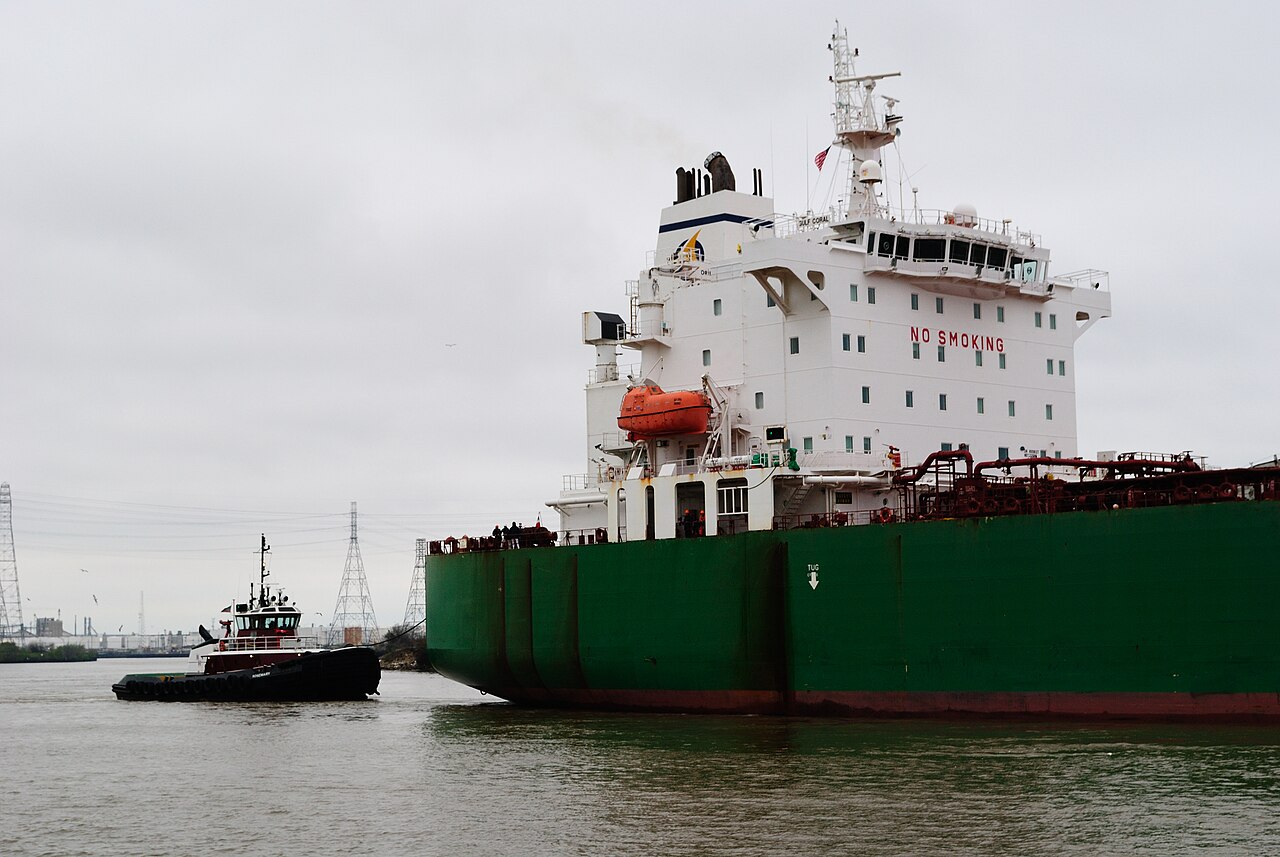
The Yangze 7 is a bulk carrier with a deadweight of 63,600 tonnes and a length of 200 meters, which was transiting the Houston Ship Channel at the time of the incident. The Houston Ship Channel is one of the busiest and most congested waterways in the world, handling constant traffic of tankers, bulk carriers and towing vessels serving the Port of Houston and surrounding petrochemical terminals.
The NTSB further found that the Houston Pilots association had no policy at the time of the accident prohibiting pilots from using personal electronic devices for non-operational purposes while directing vessel movements. Following the collision, the association adopted a policy restricting non-operational phone use, permitting it only for communications tied to vessel safety, coordination with other pilots, or contact with the Coast Guard.
Legal and Industry Response
The collision caused an estimated $3.7 million in damages, salvage expenses and pollution mitigation costs, according to NTSB figures. Jefferson, who had five years of experience as a pilot, faces one count of misconduct or neglect of ship officers under the federal statute, and the Department of Justice has characterized the case as unprecedented for a licensed marine pilot.
Lowman’s family has described a sense of relief that charges have been filed following more than two years since the fatality. The case is being watched closely across the U.S. pilotage profession, where prosecutions of licensed pilots for conduct during vessel transits have historically been rare, with most post-accident consequences limited to license suspension or civil liability rather than criminal charges.
Why it matters
The indictment marks a rare instance of criminal liability being pursued against a licensed harbor pilot, a role traditionally shielded from manslaughter-level prosecution even after fatal accidents. It underscores growing regulatory scrutiny of personal electronic device use on the bridge during pilotage, a safety issue the NTSB has flagged as a contributing factor in multiple recent U.S. waterway collisions. The case could prompt pilot associations at other major U.S. ports to tighten device policies and could influence how maritime authorities balance operational independence of pilots against accountability for navigational errors in congested channels like Houston’s.
Source: Houston Chronicle / gCaptain