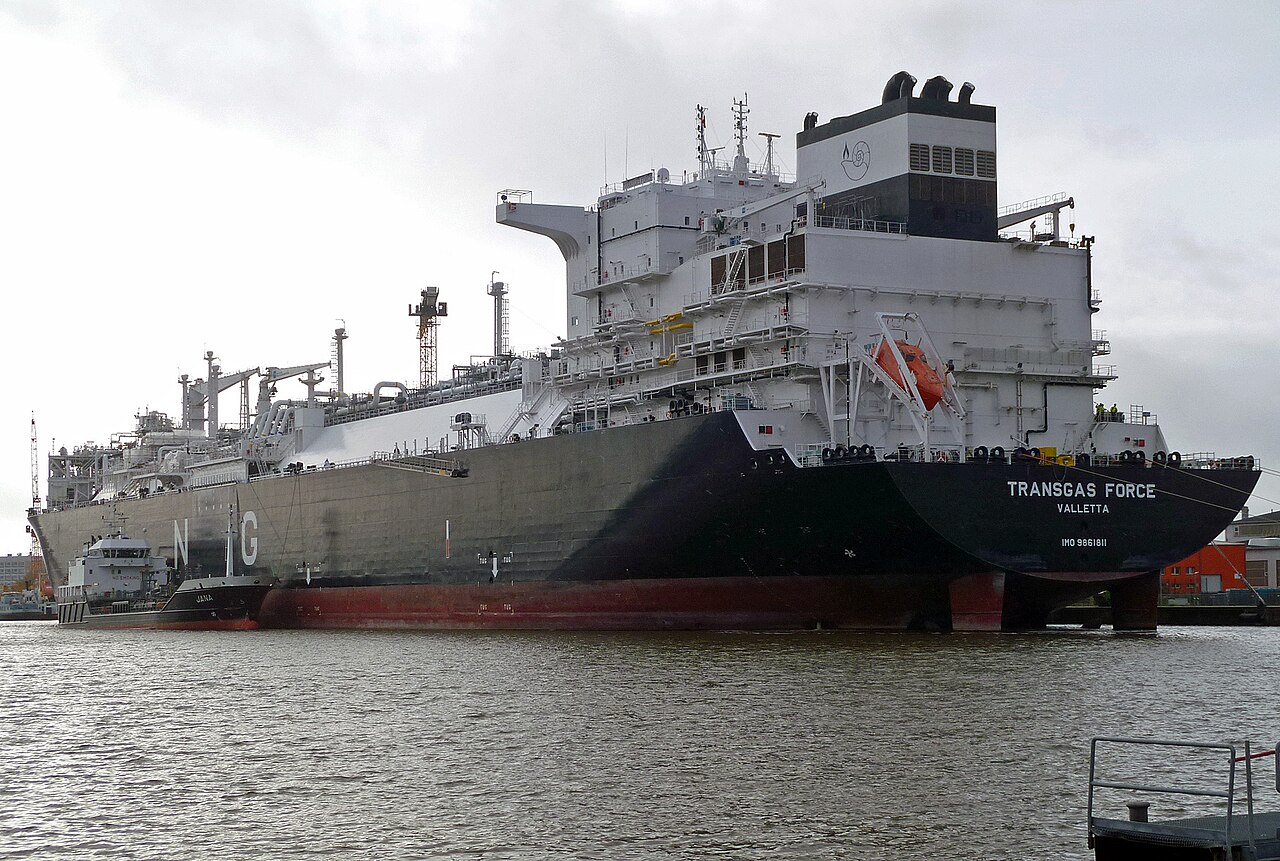
Deutsche Energy Terminal GmbH (DET), Germany’s state-owned LNG terminal operator, has commissioned its fourth floating import terminal at Stade on the River Elbe, completing a federally mandated program to build four terminals in four years. The facility, centered on the floating storage and regasification unit Energos Force, adds a new import route intended to strengthen gas supply security heading into the winter heating season.
The Stade terminal joins two existing DET-operated sites in Wilhelmshaven and one in Brunsbüttel, giving Germany a network of federally chartered floating LNG terminals built in response to the loss of Russian pipeline gas in 2022. German Economic Affairs Minister Katherina Reiche confirmed the completion of the program, framing the Stade launch as the close of the government’s emergency terminal buildout.
From Pipeline Loss to Floating Terminals
The Stade project traces back to the aftermath of 2022, when Russian pipeline gas flows to Germany were cut off, prompting Berlin to commission a fleet of floating regasification units as a stopgap and then longer-term alternative to pipeline supply. DET deployed its first unit at Wilhelmshaven in December 2022, followed by Brunsbüttel and a second Wilhelmshaven terminal, before Stade became the fourth and final site in the federal program.
The Stade project suffered repeated delays, originally targeted for completion in the first half of 2024 but pushed back by project management disputes, unfinished shore-side infrastructure and regulatory requirements. In the interim, the Energos Force, the FSRU designated for Stade, was sub-chartered to Egyptian gas company EGAS and deployed off Jordan before returning to Germany once the Stade berth was ready to receive it.
Terminal Capacity and Technical Details
The Energos Force has a storage tank capacity of 174,000 cubic meters, the largest of DET’s four FSRUs, and is moored at a dedicated energy berth built specifically for the terminal in the port of Stade-Bützfleth. German officials said the terminal is expected to feed up to 3.2 billion cubic meters of natural gas into the national grid in 2027, an amount DET said is equivalent to the theoretical annual heating demand of roughly 2.6 million four-person households.
DET said Stade’s feed-in capacity will initially be capped at 1.7 billion cubic meters through the end of 2026, pending completion of a separate onshore terminal at the same site being developed by HEH with an announced capacity of 13.3 billion cubic meters per year, targeted for commissioning in 2027. Minister Reiche said the Energos Force adds an import route that will support German gas supply beginning this winter.
Energy Security Reactions
Lower Saxony Minister-President Olaf Lies said the Stade terminal strengthens Germany’s energy supply and makes it more independent and resilient, calling Stade an important location for the project. The commissioning comes as Germany and other European countries continue efforts to diversify gas import routes away from Russian supply, with gas storage levels across Europe described in recent industry reporting as remaining below seasonal norms heading into winter.
DET’s buildout also comes against a backdrop of continued EU debate over further restricting Russian LNG imports, with a proposed ban from January 2027 under discussion alongside tighter methane emissions rules. Analysts tracking the European gas market have cautioned that near-term alternatives to Russian gas remain limited, making Germany’s new import capacity at Stade a closely watched addition to the region’s supply balance this winter.
Why it matters
The Stade terminal completes Germany’s emergency response to the loss of Russian pipeline gas, giving Europe’s largest economy four federally backed floating LNG import points in just four years. For shipping, the terminal represents sustained demand for LNG carrier tonnage delivering cargoes into the Elbe estuary and keeps FSRU assets like the Energos Force in active European service rather than redeployed elsewhere. The added import capacity also arrives as the EU weighs a full ban on Russian LNG imports from January 2027, meaning Stade’s throughput could become increasingly important to the bloc’s winter gas balance.
Source: LNG Industry / Offshore Energy