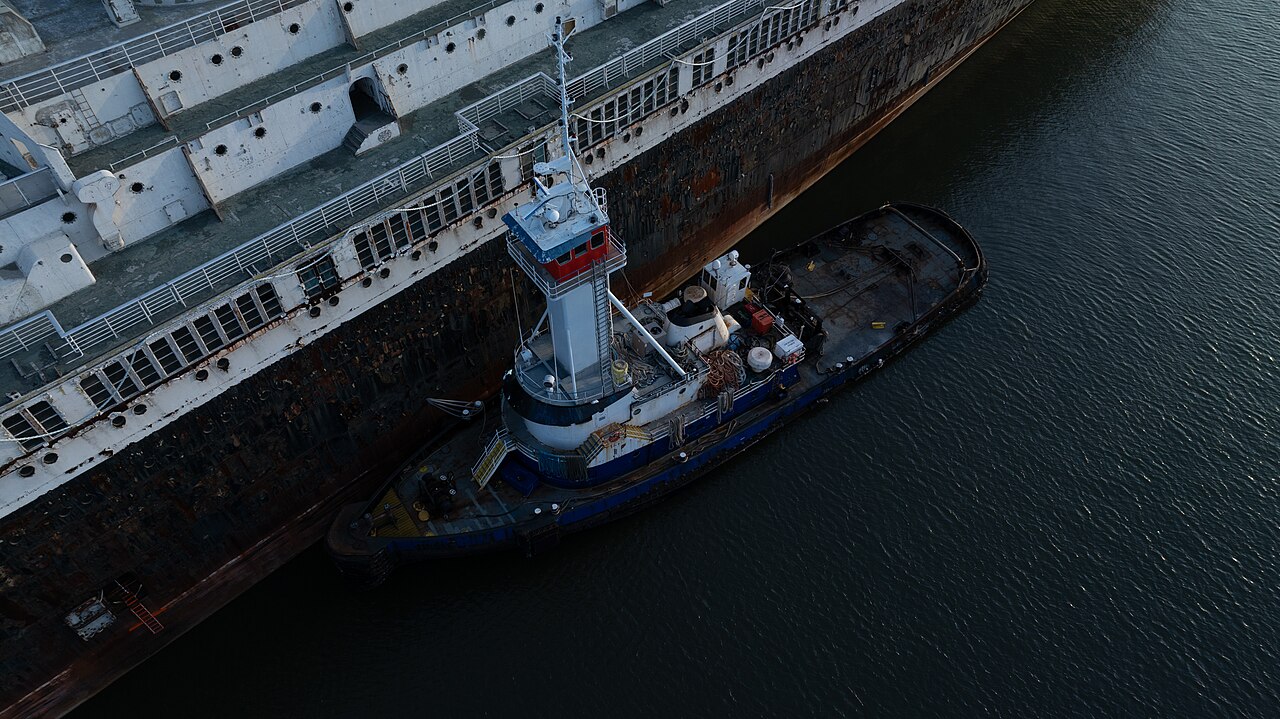
U.S. District Judge M. Casey Rodgers denied an emergency request to block the sinking of the historic ocean liner SS United States, ruling Friday against a bid by a preservation group to stop next week’s deployment of the vessel as an artificial reef off Okaloosa County, Florida. The decision clears the way for the 990-foot ship to be towed from Mobile, Alabama, and positioned roughly 22 nautical miles southwest of Destin for its planned sinking.
Unless a further injunction or operational delay intervenes, Okaloosa County expects the vessel to be positioned at its designated site before the scheduled sinking on November 12, when it is expected to become the world’s largest artificial reef by vessel length.
Court Rejects Emergency Injunction Bid
The ruling came after the SS United States Preservation Foundation and its co-founder, Steven R. Perry, filed suit in the Northern District of Florida and then sought a temporary restraining order and preliminary injunction to halt the county’s plan. Judge Rodgers found the filing lacking, writing that the motion “fails to recognize the obvious substantial expense associated with the injunction it requests,” since mooring and docking a vessel the size of the SS United States would carry significant costs that the plaintiffs had not addressed with a proposed bond.
The foundation’s lawsuit argued that the Army Corps of Engineers approved the project without sufficient environmental review and raised concerns about hexavalent chromium and zinc chromate in the ship’s coatings potentially entering the Gulf food chain. The group has said it does not oppose artificial reef projects generally but has urged officials to use a decommissioned SL-7 fast sealift ship instead, arguing another vessel should be selected in place of the SS United States. Defendants named in the case included the Army Corps of Engineers, two Corps officers, the acting Navy secretary and Okaloosa County.
Tow From Mobile and Reef Deployment Timeline
The ocean liner has been docked in Mobile, Alabama, undergoing months of preparation and remediation work ahead of its tow to the designated reef site off the Florida Panhandle. The vessel previously spent nearly three decades moored along Philadelphia’s Delaware River waterfront before a rent dispute left it without a berth, prompting its departure for Alabama last year to be readied for its new role.
Okaloosa County, which took ownership of the vessel, is partnering with the SS United States Conservancy on the ship’s future as a heritage attraction intended to draw divers and maritime tourists to the region. County officials have framed the project as a significant economic opportunity for the Florida Panhandle’s tourism sector once the reef is established and accessible to the diving community.
A Storied Vessel’s Final Voyage
Built originally to serve as a troop transport in wartime before its conversion into a transatlantic cruise liner, the SS United States was once considered the fastest ship in the world and during its service years ferried world leaders, Hollywood figures and thousands of immigrants across the Atlantic. The ship’s historical stature has fueled the preservation campaign, with Perry telling reporters the vessel “was built to sail these waters, not be sunk beneath them.”
County officials have countered that the reef project preserves the ship’s legacy in a different form, with local leaders describing it as a generational heritage opportunity for the community. The foundation’s emergency filing was its latest attempt to halt the plan, following an earlier lawsuit by a separate group, the New York Coalition to Save the Steamship United States, which a court had already dismissed for lack of standing.
Why it matters
The case highlights the recurring legal and environmental disputes that accompany the disposal of historic ocean liners once their commercial life ends, as owners weigh costly preservation against reef conversion or scrapping. For the cruise and maritime heritage sectors, the outcome sets a precedent for how courts balance historic preservation claims against the practical and financial burdens of maintaining retired vessels. The project also underscores the growing use of decommissioned ships for artificial reef tourism, an economic model increasingly attractive to coastal counties seeking to diversify local tourism revenue.
Source: Fox10 News (WALA)