The U.S. Maritime Administration approved a deepwater port license application for ST LNG, LLC, an $8.2 billion offshore liquefied natural gas export project planned roughly 10.4 miles off the coast of Matagorda, Texas, Transportation Secretary Sean Duffy announced on Wednesday.
The approval caps a review MARAD completed in just 410 days, which officials described as the fastest deepwater port licensing review in more than two decades, after oversight of such projects was shifted from the U.S. Coast Guard to the Maritime Administration to accelerate approvals.
Regulatory Review Breaks Speed Record
MARAD Administrator Stephen Carmel called the ST LNG decision the agency’s third deepwater port approval under the Trump administration, part of a broader push to speed up offshore energy infrastructure approvals. The approval comes about 10 months after Duffy announced that the Maritime Administration would take on oversight of deepwater port licensing from the U.S. Coast Guard and streamline environmental reviews to accelerate license approvals.
MARAD finalized the final environmental impact statement for ST LNG in just 410 days, nearly 3.7 years faster than the historical average, the Department of Transportation said. To compress timelines, MARAD’s team engaged cooperating agencies such as NOAA Fisheries earlier in the scoping and pre-application phases and sought to maximize use of existing regional data from prior offshore projects rather than commissioning duplicative studies.
Offshore Design and Export Capacity
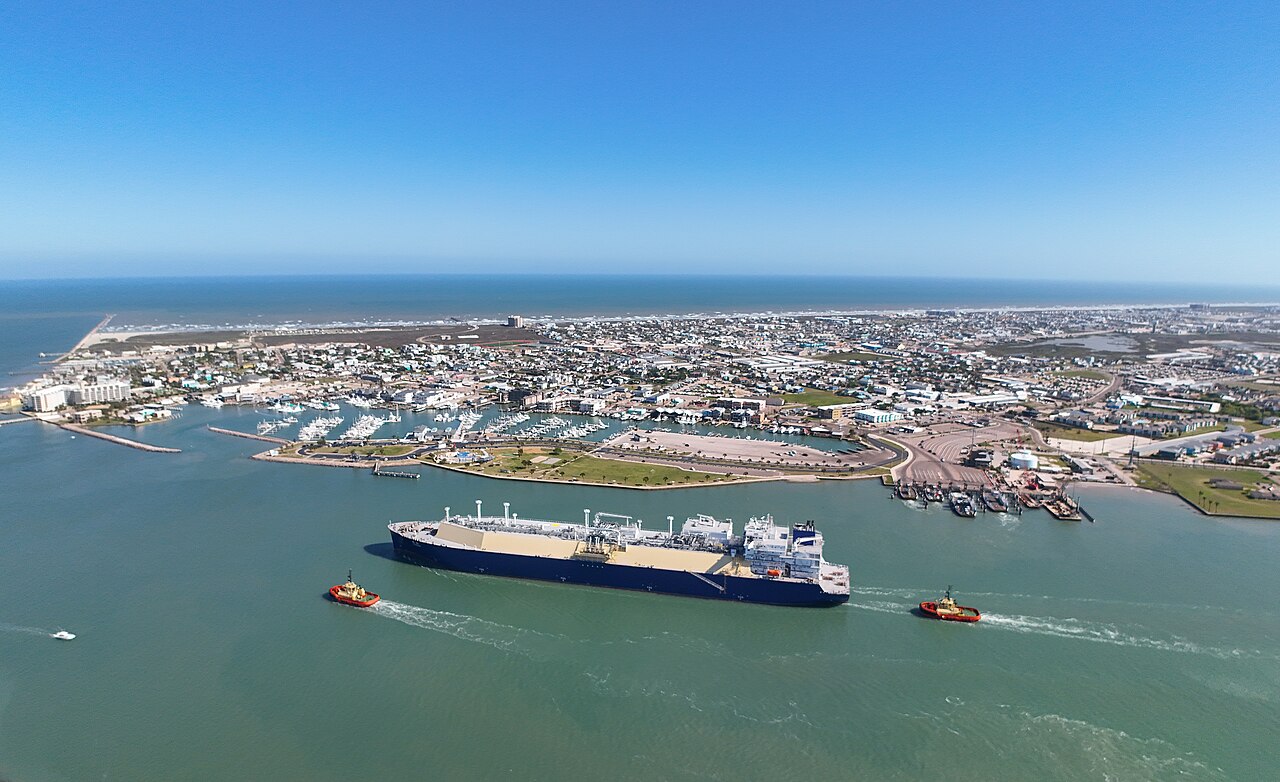
The deepwater port will deploy four LNG Floating Storage Units that receive and store gas prior to vessel transfer, with LNG loaded onto standard carriers with cargo capacities between 125,000 and 180,000 cubic metres, averaging 146,000 cubic metres, for export to both Free Trade Agreement and non-FTA nations. At full buildout the facility will include 20 offshore platforms, four vessel mooring systems and approximately 7.7 miles of pipeline, built in four phases each containing gas treatment, liquefaction, bridge support, LNG transfer and accommodation platforms.
The project will feature four liquefaction plants each capable of producing 2.1 million tonnes per annum, for a combined capacity of 8.4 million tonnes annually. Feed gas will be supplied from the Tres Palacios Natural Gas Storage and Trading Hub and the Williams Markham Gas Processing Plant through an existing Transco pipeline about 5.6 miles northeast of the port.
Jobs, Timeline and Broader LNG Boom
The project is projected to support roughly 2,000 construction jobs and up to 855 permanent positions once operational, with at full operational capacity expected to increase total U.S. LNG export capacity by 7 to 9%. Construction is expected to begin in 2027, with service starting in 2029, according to project backers, some of whom have previously worked on New Fortress Energy’s Fast LNG initiative.
The approval lands amid a broader U.S. LNG expansion, with the country already the world’s largest exporter, holding more than 100 million tonnes per annum of operational capacity and close to another 100 mtpa under construction. The Trump administration’s pro-energy stance has prompted major exporters including Cheniere and Venture Global LNG to press ahead with permitting additional capacity, while the Pipeline and Hazardous Materials Safety Administration separately proposed new rules the same day to further speed LNG project approvals.
Why it matters
The ST LNG approval signals a structural shift in how the United States licenses offshore energy infrastructure, with reviews compressed from years to little over a year under MARAD’s new authority. For shipping, moving liquefaction and loading operations offshore reduces LNG carrier traffic through congested Gulf Coast channels and lowers collision risk, while adding meaningful new export volumes for the global LNG carrier fleet to serve. The project also reinforces the United States’ position as the dominant global LNG supplier at a moment when buyers in Asia and Europe are seeking diversified, reliable gas sources.
Source: gCaptain