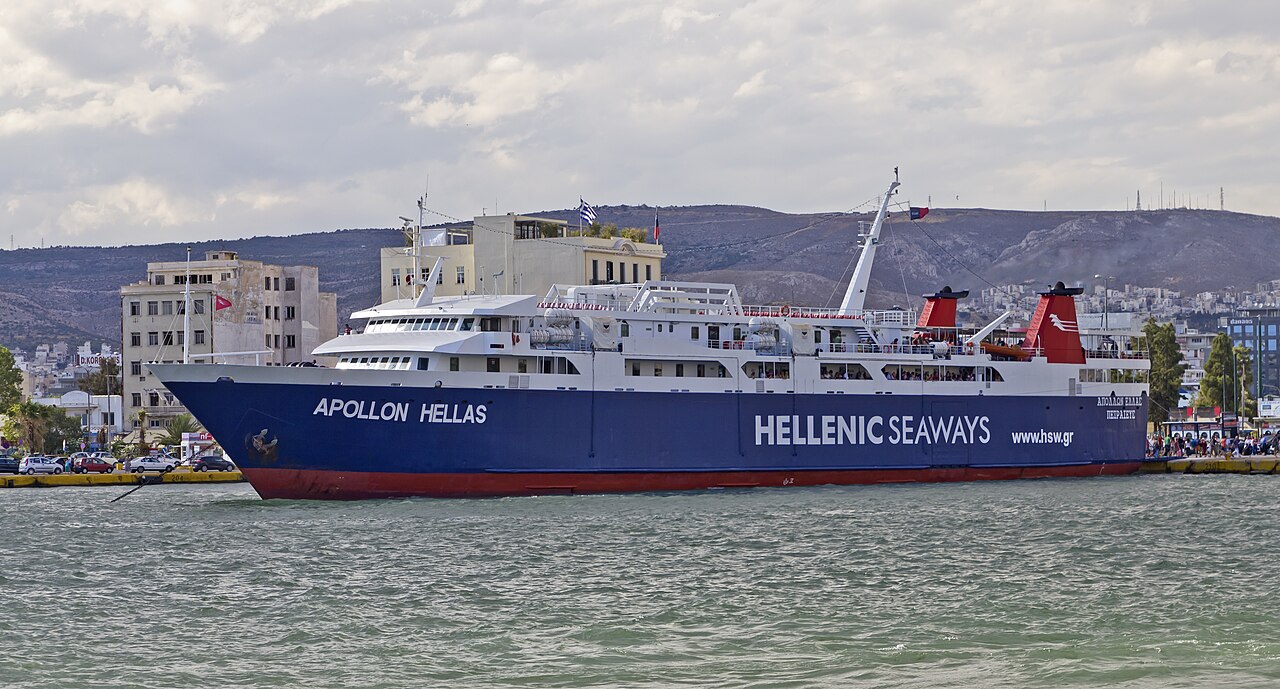
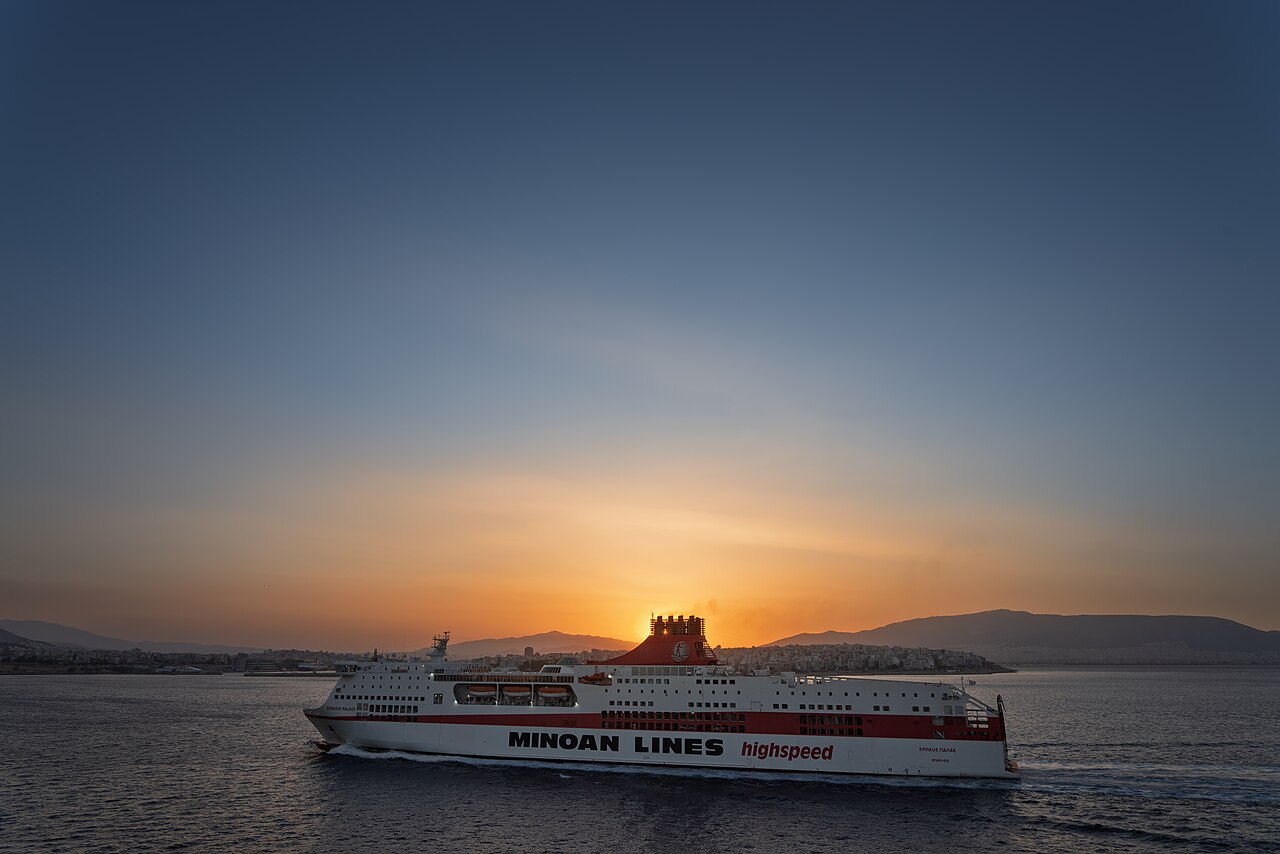
Cargo handling and ferry sailings were suspended at Piraeus on Friday, October 30, as dockworkers and seafarers joined an international day of action against the shipment of weapons through commercial ports. Roughly 3,000 workers took part in the walkout at Greece’s largest port, which also serves as the main gateway to the Athens region and the Greek islands.
The stoppage was part of a wider mobilization spanning 113 ports in 22 countries, organized around the Istanbul Declaration signed by dockworkers’ unions in May 2026. In Greece, the action combined a cargo-handling stoppage at Piraeus with a separate 24-hour strike by seafarers that halted ferry connections to Rafina, Lavrio, Patras, Igoumenitsa, Elefsina and the Rio-Antirrio crossing.
Dual Mobilization at Greek Ports
The Piraeus action combined two separate but coordinated stoppages. The ENEDEP dockworkers’ union organized a halt to cargo operations at the port as part of the international protest, while the Panhellenic Seamen’s Union (PENEN), joined by the Panhellenic Marine Engineers’ Union and the engine crew union “O Stefenson,” called a 24-hour ferry strike citing the dangers facing crews caught in conflicts in the Middle East, the Red Sea and the Black Sea.
Seafarers’ demands extended beyond safety to pay and working conditions, including larger crews, a doctor on every ship, a seven-hour day and a five-day week. Dockworkers separately pressed for faster negotiations with the Piraeus Port Authority after the last collective agreement expired on July 31, 2026, with the maritime labor federation OMYLE’s board having unanimously backed the walkout on October 23.
A Campaign Rooted in the Istanbul Declaration
The protest traces back to May 2026, when dockworkers’ unions from more than 35 European and Mediterranean countries met in Istanbul and signed a joint declaration refusing to let ports be used to move weapons, ammunition, military equipment or troops to war zones. Unions in Italy, France, Greece, Spain’s Basque Country, Turkey and Morocco issued the original call for Friday’s action, which organizers say was ultimately backed by more than 25 unions across 113 ports.
The movement has since expanded well beyond its European base, with solidarity actions reported in India, Australia, Brazil, Mexico, Uruguay and the United States, where International Longshore and Warehouse Union Local 10 took part in actions in Oakland and San Francisco. Germany’s ver.di, Sweden’s Svenska Hamnarbetarförbundet and Denmark’s 3F were also among the participating unions, with the International Transport Workers’ Federation lending its backing to the campaign.
Operational and Market Context
The strike lands at a difficult moment for Piraeus, which is majority operated by COSCO Shipping. Container throughput at the port’s Pier I fell 38.7% in the first half of 2026 to 241,290 TEU, with both domestic and transhipment volumes declining, while Piraeus Port Authority revenues dropped 8.9% year-on-year to EUR 111.9 million over the same period.
Organizers of the broader international action estimated that the coordinated strikes could disrupt over 40% of Mediterranean cargo movements and affect more than $2 billion worth of freight, though these figures have not been independently verified. In Greece, the one-day disruption primarily affected ferry passengers bound for the islands and cargo handling at Piraeus, rather than causing lasting congestion, according to union and port officials.
Why it matters
The Piraeus action illustrates how geopolitical conflicts in the Middle East, the Red Sea and the Black Sea are increasingly spilling into labor relations at major Mediterranean transshipment hubs. With Piraeus already navigating a sharp decline in container volumes, recurring political strikes add a further variable for shipping lines scheduling calls through one of Europe’s busiest gateways. The scale of the coordinated action, spanning 113 ports in 22 countries, also signals growing organizational capacity among dockworkers’ unions to link labor demands with opposition to arms shipments, a dynamic shipowners and port operators will need to factor into contingency planning.
Source: GreekReporter.com