A senior US senator has sent a letter to a Glyfada-based Greek shipping company demanding it recall a tanker carrying Russian diesel before it reaches an American port, escalating a dispute over the legality of resumed US purchases of Russian fuel. Senator Richard Blumenthal (D-CT) wrote to Eastern Mediterranean Maritime Limited (EASTMED) on October 27, warning that delivering the cargo would violate federal sanctions law despite authorization from the Trump administration.
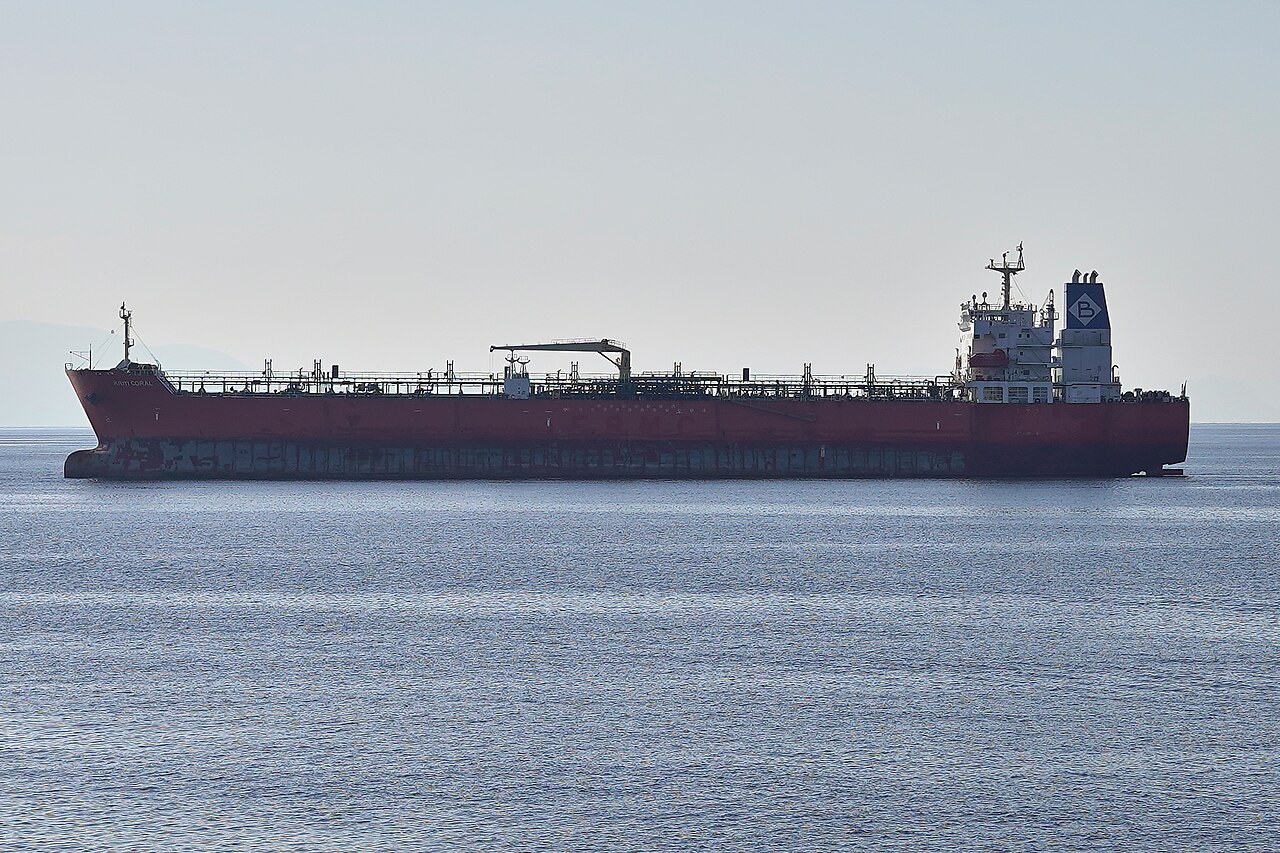
The vessel at the center of the dispute is the Malta-flagged tanker Agioi Fanendes (IMO 9798375), which loaded roughly 40,000 metric tons of diesel at Russia’s Baltic port of Primorsk on October 22 and set a course for the Port of New York and New Jersey, with an estimated arrival of November 7. EASTMED, managed by Athanasios J. Martinos, has said the cargo’s final discharge port has not been confirmed.
A Collision Between Statute and Executive License
The dispute centers on the Ending Importation of Russian Oil Act of 2022, which banned Russian energy products from the United States following Moscow’s invasion of Ukraine. Blumenthal’s letter argues that lifting the ban requires congressional consent and presidential certification that the war has ended, conditions that have not been met, and that no Treasury license can supersede the statute.
The administration has relied on Treasury General License 135, which authorizes transactions involving Russian diesel exports through April 7, 2027, part of an October 9 agreement between President Donald Trump and President Vladimir Putin aimed at easing domestic fuel prices amid supply disruptions linked to the war with Iran. Blumenthal rejected that justification directly, writing that the license ‘cannot supersede clear, unambiguous law’ and that no executive action can override statutory intent.
EASTMED and the Agioi Fanendes
Eastern Mediterranean Maritime is a long-established Greek ship management company associated with the Martinos shipping family. In his letter to Managing Director Athanasios J. Martinos, Blumenthal demanded the company confirm whether the Agioi Fanendes intends to discharge at a US port and, if so, recall the vessel and refrain from further Russian diesel transactions.
Ship-tracking data cited by industry monitors showed the tanker’s AIS destination shifting from Primorsk to ‘USNY’ on departure before briefly changing to ‘for orders,’ leaving its ultimate discharge port technically unconfirmed even as it sailed west through the Gulf of Finland. Separately, two other tankers that left St. Petersburg around the same time with claimed diesel cargoes bound for North America are assessed by TankerTrackers.com to actually be carrying Russian-origin UAN fertilizer, a product not subject to the same sanctions.
Political Pressure Mounts
Blumenthal, a co-author of earlier Russia sanctions legislation, accompanied his letter with a public statement describing it as a ‘sledgehammer message’ to shipping companies moving Russian diesel toward US ports, telling them to reverse course while there is still time. He argued that the administration’s licensing decisions do not exempt carriers from legal or moral responsibility and that firms delivering the cargo would be complicit in sanctions evasion.
The Treasury Department maintains its general license makes the transactions lawful, while the White House has defended the diesel arrangement as a way to ease fuel costs amid disruptions tied to the conflict with Iran. The standoff leaves EASTMED and other owners navigating conflicting signals from Washington just as the Agioi Fanendes continues its scheduled approach to the US East Coast.
Why it matters
The episode puts a mainstream Greek tanker operator at the center of a live legal fight over whether a presidential fuel deal with Russia can override a congressionally enacted import ban, with direct exposure for the company and crew if US law is ultimately enforced against the cargo. For Greek shipowners more broadly, who control a large share of the world’s tanker tonnage, the case underscores the compliance risk of carrying sanctioned-adjacent cargoes even when a government license appears to authorize the trade. A congressional move to block the shipment could also disrupt the broader US-Russia diesel arrangement meant to ease domestic fuel prices.
Source: gCaptain