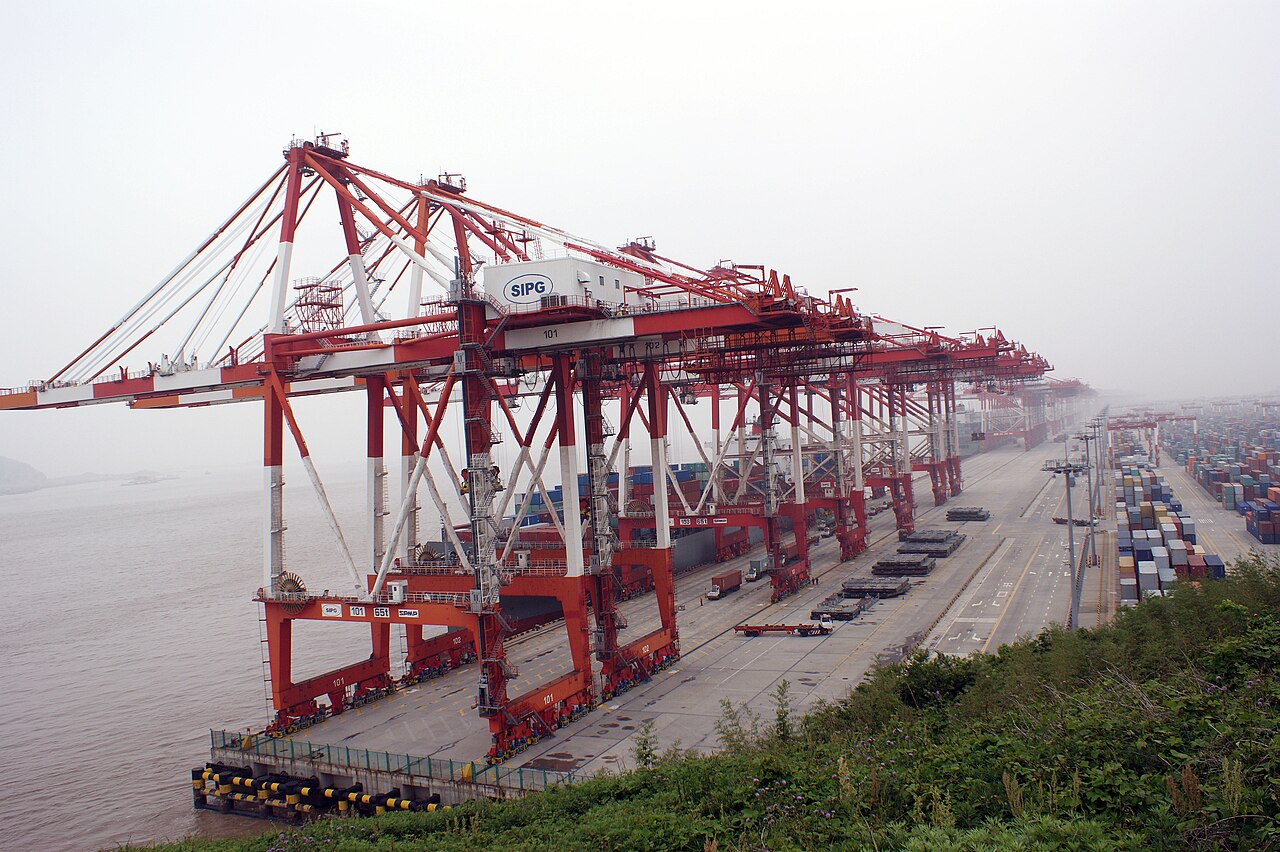
The Port of Shanghai handled 5.135 million twenty-foot equivalent units in September, a new monthly record for the world’s busiest container port, as terminal operators cleared backlogs built up after three successive typhoons disrupted operations starting in July.
Shanghai International Port Group (SIPG), which operates the port, said the September volume marked an increase of 6.2 percent over the same month in 2025, with a daily average of 171,000 TEU moving through the port’s terminals.
Typhoon Disruptions Preceded Record Month
Shanghai’s operations were disrupted starting in July by three powerful typhoons, which forced suspensions of cargo handling and contributed to a growing backlog of vessels and containers. The disruption was compounded by a surge in exports and strong international demand that continued even as storms hit the Chinese coast, leaving ships waiting longer to berth and terminals operating above normal capacity.
SIPG said it undertook a concerted effort and close coordination to alleviate the temporary production issues that followed the typhoons, managing concentrated arrivals of ships alongside backlogs of export cargo arriving from manufacturers. The port group reported that it optimized berthing sequences and loading and unloading operations while coordinating with shipping lines to merge shipments where possible to work through the congestion.
Record Throughput and Terminal Performance
The September total of 5.135 million TEU set a new monthly record for the port, with one terminal, the Mingdong Terminal, exceeding 30,056 TEU in a single 24-hour period, beating its own prior operational record. Shanghai emphasized the high level of automation and production organization credited with managing the large volumes during the recovery period.
SIPG also reported that operations continued throughout China’s National Day holiday week, with the port handling 1.15 million TEU during that period, a 1.3 percent increase over the same week the previous year. The figures suggest the port sustained elevated throughput even during a period typically associated with reduced staffing and slower cargo movement.
Outlook for Congestion and Regional Trade
Shanghai said it continues to closely monitor vessel arrivals and cargo volume fluctuations but asserted that the port has fully returned to normal operating conditions following the successive typhoons. The recovery follows weeks in which congestion at Shanghai and nearby Ningbo had pushed berthing delays to around ten days, with container shipping consultancy Linerlytica estimating the logjams held up nearly 3.92 million TEU, or roughly 11 percent of the global container shipping fleet, at the height of the disruption.
Major carriers including Maersk and Hapag-Lloyd had skipped calls at Shanghai, Ningbo and Yantian earlier in the typhoon season to manage the congestion, with the fallout hitting Asia-Latin America and Asia-Europe services hardest. Reports from across Asia indicate other regional ports are similarly working through weather-related backlogs as the typhoon season winds down heading into the fourth quarter.
Why it matters
Shanghai’s record throughput signals that the world’s busiest container port has absorbed a severe weather-driven disruption without lasting damage to its competitiveness, a reassurance for shippers on Asia-Europe and transpacific trades who rely on the port’s reliability. The scale of the recovery, clearing a backlog that at its peak tied up nearly 4 million TEU of global capacity, illustrates both the vulnerability of concentrated container traffic to extreme weather and the operational capacity China’s largest terminals can mobilize to restore schedules. With typhoon seasons intensifying, the episode is likely to inform how carriers and shippers plan contingency capacity and routing around China’s east coast ports going forward.
Source: The Maritime Executive