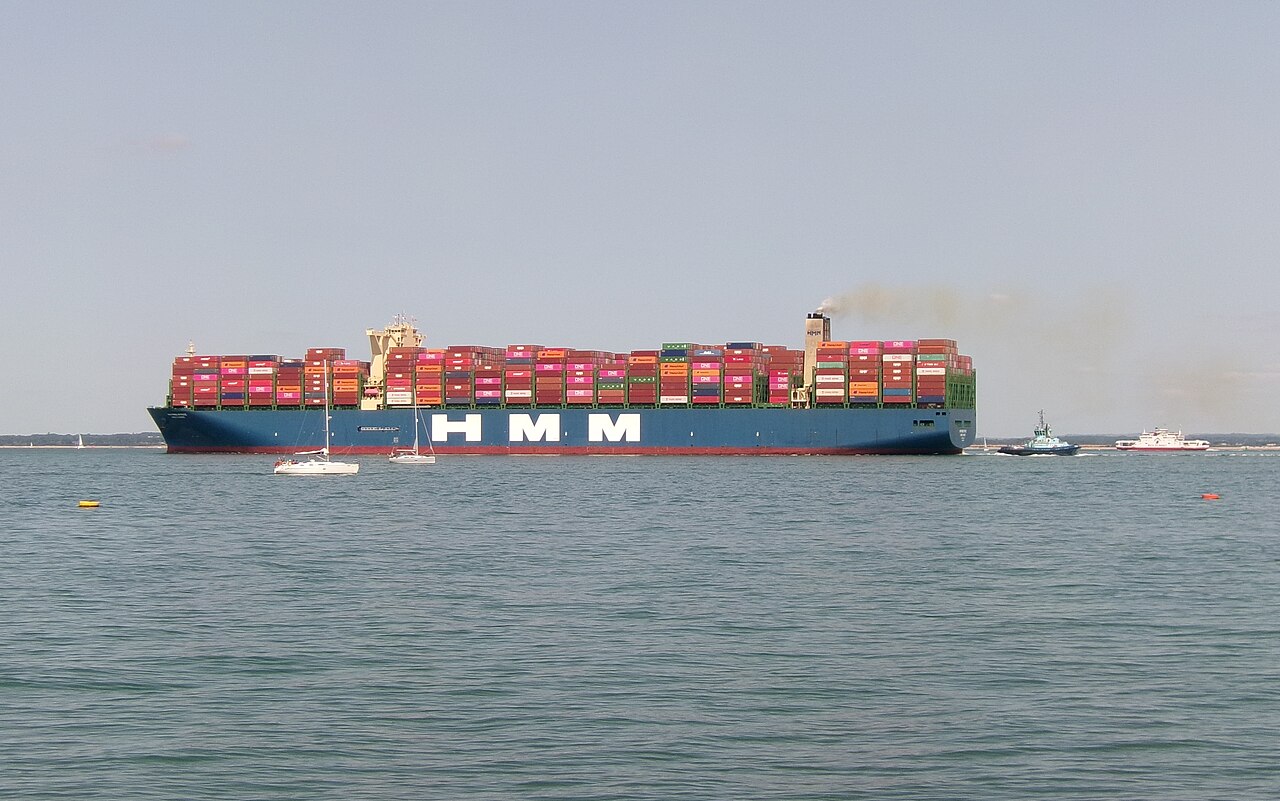
South Korea’s HMM has approved a $1.62 billion investment in 12 containerships, combining fresh orders for eight 13,000 TEU newbuildings with the acquisition of four smaller vessels through resale deals, the Seoul-listed carrier disclosed in a stock exchange filing. The board cleared the spending of KRW2.168 trillion on 15 October, adding to a fleet expansion drive that has accelerated through 2026.
The package includes three 2,800 TEU and one 1,700 TEU vessel acquired as resale newbuildings, ships originally ordered by other owners and transferred before delivery. Combined, the 12 vessels will add 114,100 TEU of capacity, with deliveries scheduled for completion by December 2029.
Order Details and Shipyard Gaps
HMM has not yet identified the shipyards that will build the eight larger 13,000 TEU vessels, nor disclosed the sellers of the four smaller ships being acquired through resale transactions. Propulsion specifications for the new tonnage have also not been released, leaving open questions about whether the newbuildings will follow recent industry moves toward LNG dual-fuel or methanol-ready designs. The total vessel price was disclosed as $1,617,156,000, equivalent to 8.16 percent of HMM’s consolidated equity at the end of its most recent financial year.
A resale transaction allows a buyer to take over vessels already under construction for another owner, which can accelerate fleet growth compared with placing entirely new orders. HMM noted that the final investment amount and delivery timeline could still shift depending on revisions to vessel specifications and build schedules. The investment period runs from 15 October 2026 through 31 December 2029, matching the expected delivery window for the dozen ships.
Part of a Larger 2030 Growth Plan
The latest commitment follows a KRW4 trillion ($2.8 billion) order placed last year covering 12 LNG dual-fuel 13,000 TEU containerships and two VLCCs, with HD Hyundai and Hanwha Ocean securing those boxship contracts. HMM operated 97 containerships with a combined capacity of roughly 1.02 million TEU in the first half of 2026, alongside 36 vessels already on its orderbook. A revised strategy approved by the board in July 2026 targets 166 containerships totaling 1.47 million TEU by the end of 2030, replacing an earlier 2024 plan that had aimed for 130 ships and 1.55 million TEU.
The revised plan is built around a hub-and-spoke network, deploying large vessels on long-haul ocean routes supported by smaller and medium-sized ships linking origin and destination ports through regional hubs. The fleet buildout forms part of a broader KRW29 trillion ($21.6 billion) investment programme through 2030 that also covers bulk carriers, with HMM targeting 110 bulkers totaling 13.52 million dwt by the same deadline.
Corporate Moves and Digital Push
The fleet investment coincides with HMM’s relocation to Busan, where the carrier began operations at a temporary headquarters in Bujeon-dong, Busanjin-gu, on 12 October. The move aligns the country’s largest container line more closely with South Korea’s push to position Busan as a maritime and logistics hub. HMM is majority owned by Korea Development Bank and Korea Ocean Business Corporation, state-linked entities that have overseen the carrier’s turnaround since a prior debt restructuring.
Beyond vessel acquisitions, HMM is pursuing digitalisation to sharpen fleet competitiveness, having signed agreements with Avikus in January 2026 to deploy AI-based autonomous navigation across an initial 40 vessels. The carrier also struck a memorandum of understanding with HD Korea Shipbuilding & Offshore Engineering and Avikus for joint research on autonomous navigation technology, with wider fleet deployment contingent on the results of that cooperation.
Why it matters
HMM’s latest newbuilding commitment underscores how major Asian carriers continue to expand capacity despite persistent overcapacity concerns in the global boxship sector, betting on sustained transpacific and Asia-Europe demand through the end of the decade. The shift to resale acquisitions alongside traditional newbuilding orders shows carriers seeking faster routes to fleet growth without committing fully to the multi-year lead times of fresh shipyard contracts. As South Korea’s flagship carrier pursues a hub-and-spoke network and AI-driven autonomous navigation, the move also signals how national carriers are using fleet modernization to compete with larger European and Chinese rivals for market share.
Source: Splash247