This week’s news flow showed an industry simultaneously flush with capital and exposed to rising risk. Greek shipowners drove a wave of capital-markets and newbuilding activity, from an oversubscribed Athens IPO to a fresh 12-tanker order in China, while ports in Long Beach and Shanghai posted record monthly volumes shaped by disruption elsewhere in global trade routes.
At the same time, the war in Ukraine spilled further into NATO waters as drone strikes hit tankers off Romania and Bulgaria, a French warship boarded a sanctioned shadow-fleet tanker deep in the Indian Ocean, and a cyber extortion group threatened to leak data from dozens of shipping and port firms. Underlying all of it was a structural warning from Clarksons Research: the world fleet is ageing at a record pace while ship recycling has slumped to a 50-year low, raising questions about how long owners can keep deferring retirement decisions.
Greek Shipping’s Capital Markets Momentum
The week’s standout story was Capital Maritime Finance’s Euronext Athens IPO, which drew €1.08 billion in orders for a 36-ship containership platform controlled by Evangelos Marinakis, more than four times its original target and backed by nearly 14,000 retail accounts. It capped a run of Greek capital-markets moves that also included Danaos exploring a Norwegian listing for its dry bulk unit, a carve-out that would separate its fast-growing Capesize fleet from its much larger containership business. Both deals illustrate how Greek owners are increasingly using specialised exchanges in Oslo and Athens to unlock value fleet by fleet rather than relying solely on New York.
That confidence sat alongside frustration over the national flag. At the Capital Link forum, four prominent owners used a call for Greek flag registry reform to highlight that only about 500 of the roughly 6,000 Greek-owned ships fly the Greek flag, blaming slow administrative service and rigid crewing rules even as some operators reported a more responsive registry. The debate came in the same week Greece marked the passing of shipping magnate George Vardinogiannis, a founding-generation tanker owner and former Panathinaikos president whose career, including a Rhodesia sanctions-busting voyage, underscores how today’s enforcement and registry questions echo decades of Greek maritime history. Fleet renewal continued at the smaller end of the market too, with Attica Group’s €8.3 million sale of the 1987-built ferry Lefka Ori, while Shipping Minister Vasilis Kikilias used talks in Tokyo to press Japan on shipyards, ports and Strait of Hormuz security, noting that Greece and Japan together control roughly 32 percent of the world’s merchant fleet.
A Newbuilding Wave Meets an Ageing, Unrecycled Fleet
Newbuilding activity showed no sign of slowing. Greek owners including George Procopiou’s Dynacom placed a 12-tanker order worth well over $840 million at China’s Hengli Heavy Industries, extending a relationship that has now brought the yard 177 Greek-linked ships worth some $10.2 billion in three years. South Korea’s HMM matched that appetite with a $1.62 billion order for 12 containerships, combining fresh newbuildings with resale acquisitions as part of a plan to reach 166 boxships by 2030.
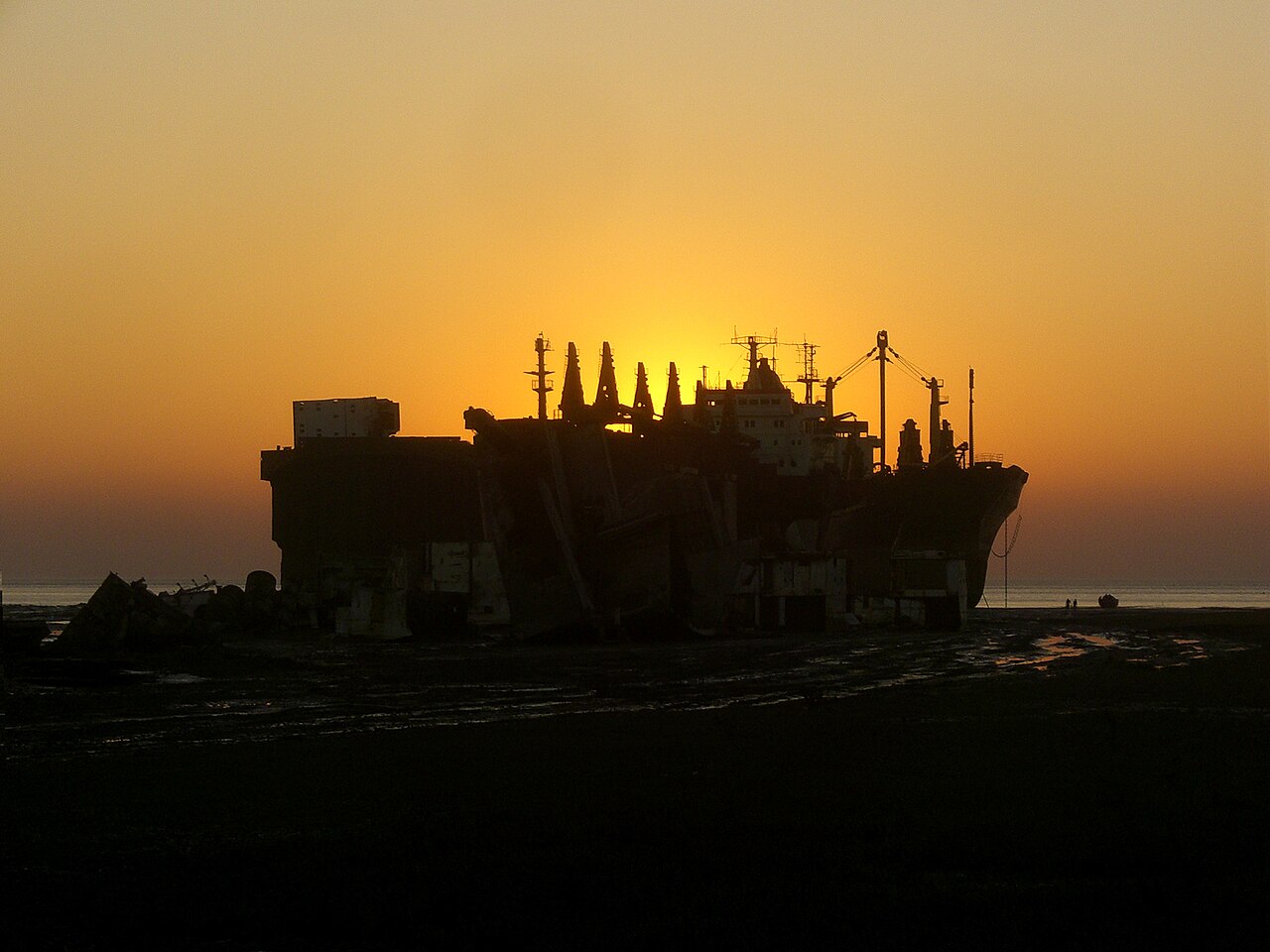
Yet this ordering boom is unfolding against a stark structural backdrop: global ship recycling has fallen to its lowest sustained level in more than 50 years, with over 340 million gross tons of shipping now at least 20 years old as owners keep ageing, still-profitable vessels trading rather than scrapping them. The same appetite for fleet renewal and diversification showed up in efforts to future-proof operations, with South Korea’s PanStar Acro completing the first Korean round-trip container voyage via the Northern Sea Route and Singapore, CMA CGM and SLNG signing an MoU to develop liquefied bio-methane bunkering in the world’s busiest bunkering port, both pointing to owners and hubs hedging against future fuel and route disruption even while conventional newbuilding orders surge.
Black Sea Escalation and Sanctions Enforcement Widen
The war in Ukraine pushed further into NATO territory this week as drone strikes on tankers off Romania and Bulgaria killed two people, left at least 25 missing, and struck at least seven cargo ships since early October, prompting both governments to weigh invoking NATO consultations. The attacks hit the Sulina canal corridor used to export Ukrainian grain, the same vulnerability that lies behind a Baltic states push for an EU-wide ban on Russian grain transit through the bloc’s ports, as Lithuania, Latvia and Estonia argue Moscow is exploiting EU infrastructure to offset Black Sea disruption to its own exports.
Sanctions enforcement also expanded geographically, with the French Navy boarding the shadow-fleet tanker DF Peak more than 450 nautical miles south of Réunion, the fifth Russia-linked tanker intercepted by French forces since 2024 and a sign that enforcement is moving well beyond Europe’s traditional patrol zones. Separately, Eurojust-coordinated arrests in Norway, Germany and Romania targeted suspected fraud in NATO warship husbandry services, a reminder that elevated naval activity amid Russia tensions is also creating new vulnerabilities in military logistics contracting.
Ports Post Records While Security and Cyber Risks Persist
Container terminals delivered a string of record numbers this week. The Port of Long Beach handled nearly 1 million TEUs in September, its busiest month in 115 years, as shippers rerouted around Panama Canal restrictions and diesel costs, while the Port of Shanghai moved a record 5.135 million TEU in the same month, clearing a backlog left by three successive typhoons. In Germany, ver.di dockworkers accepted a new wage deal, averting indefinite strikes at six major ports, though yard congestion at Bremerhaven and Hamburg will take time to clear.
Security risks away from the Black Sea took different forms. The IMB reported global piracy incidents at a 34-year low, even as Somali hijackings pushed crew casualties to their highest level in years, underlining that falling incident counts mask rising danger in specific hotspots. Meanwhile a cyber extortion group calling itself n0n threatened to leak data from 38 shipping and port firms across 18 countries unless ransoms are paid, exposing how shared digital infrastructure for terminals and carriers can concentrate risk across the industry.
What to watch next week
The n0n leak deadline of October 19 is the most immediate flashpoint, and will test whether the threatened data release materialises and how exposed terminal operators and carriers respond. In the Black Sea, watch whether Romania and Bulgaria formally invoke NATO Article 4 consultations and whether the Baltic states’ proposed EU transit ban on Russian grain reaches the next European Council meeting. On capital markets, attention turns to Capital Maritime Finance’s trading debut on Euronext Athens and whether Danaos sets a timetable for its proposed Norwegian dry bulk listing, while the ZDS employers’ side still needs to formally ratify the German port wage deal before that dispute is fully closed.