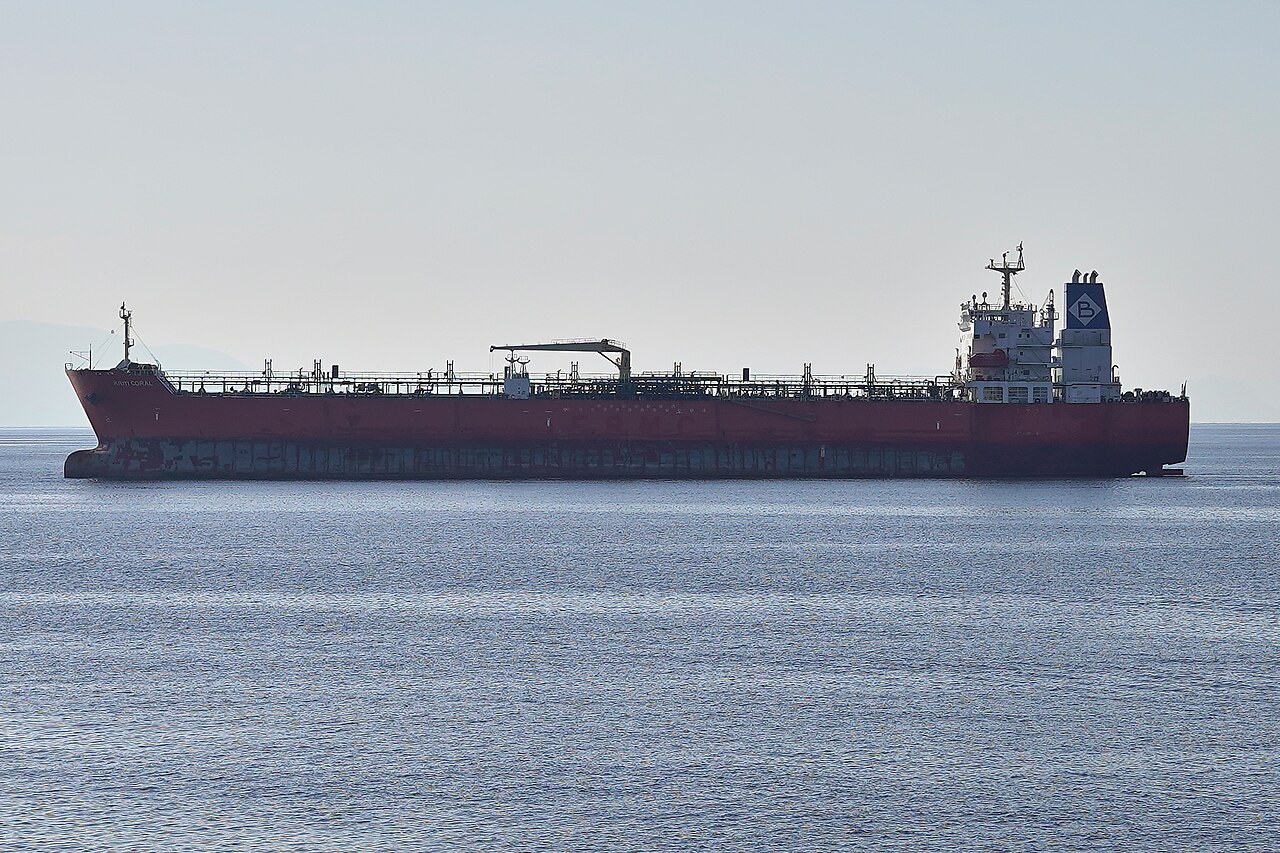
The French Navy boarded the sanctioned oil tanker DF Peak on the high seas of the Indian Ocean on October 12, more than 450 nautical miles south of Réunion Island, French President Emmanuel Macron announced. The operation targeted a vessel long suspected of belonging to Russia’s shadow fleet of tankers used to circumvent Western sanctions on Moscow’s oil exports.
Macron said French forces suspected the Aframax-class tanker of sailing under a false flag and engaging in illicit fuel transportation activities. The vessel was being escorted under naval guard toward an anchorage near Réunion for further checks as part of a judicial investigation opened by local prosecutors.
Operation Details and Legal Basis
French naval units based at Port-des-Galets on Réunion, operating under the Armed Forces in the South Indian Ocean Zone command, intercepted the DF Peak far from France’s usual European interception zones in the Mediterranean and Atlantic. The French Armed Forces General Staff said the boarding was carried out under Article 110 of the United Nations Convention on the Law of the Sea, which permits warships to verify a vessel’s nationality on the high seas when there is reasonable doubt about its registration.
A boarding team examined the ship’s documents and confirmed doubts over the regularity of the flag it was flying, with the vessel’s Equasis record suggesting it was falsely registered in Benin. Footage released by the French military showed commandos fast-roping from a helicopter onto the tanker’s deck during the operation. French Armed Forces Minister Catherine Vautrin said the Navy was escorting the DF Peak toward Réunion for further checks under the authority of the island’s prefect.
Vessel History and Sanctions Record
Built in 2006, the 110,000 dwt tanker served in the state-owned Sovcomflot fleet as the NS Captain until 2024, when it was renamed Kaliningrad, before taking on its current name in 2025. It became part of the SCF-linked, Dubai-based Sun Ship fleet in early 2022 and is currently managed by a company in Hong Kong. Ukraine’s military intelligence agency identifies the DF Peak, with IMO number 9341067, as a crude oil tanker tied to the sanctioned Russian shipping company Sovcomflot.
The vessel is listed as subject to sanctions imposed by the United States, European Union, United Kingdom, Canada, Switzerland, Japan and Ukraine. According to the Equasis database, the ship has used a Benin flag registration, a jurisdiction that has previously served as a haven for shadow fleet tonnage and has since taken steps to deregister noncompliant vessels. The DF Peak is reported to be at least the fifth Russian-linked tanker boarded by French forces since 2024, following a June interception of the tanker Deliver off Sicily.
Diplomatic and Market Reactions
Macron said the action demonstrated France’s determination to uphold the rule of law and combat illicit trafficking wherever it occurs, framing the boarding as part of a broader campaign against the shadow fleet across international waters. Russia’s embassy reacted by characterizing the seizure as piracy, underscoring the diplomatic friction such interdictions continue to generate between Paris and Moscow.
A prosecutor in Réunion has opened a judicial case tied to the vessel’s suspected false flagging, though French authorities have not said whether the ship or its crew have been formally seized or detained. The operation extends France’s shadow fleet enforcement well beyond its traditional European patrol areas, signaling a geographic expansion of Western efforts to disrupt the logistics chains supporting Russian oil exports under sanctions.
Why it matters
The boarding marks one of the most remote high-seas interdictions of a Russia-linked tanker since the war in Ukraine began, demonstrating that Western navies are now willing to pursue shadow fleet vessels far from Europe’s coastal waters. It signals an escalation in enforcement tactics against vessels using false flags to evade sanctions, a practice that has allowed Moscow to continue monetizing oil exports despite price caps and asset freezes. The action could prompt shadow fleet operators to reroute vessels away from the southern Indian Ocean and increase legal and insurance risk premiums for tonnage suspected of sanctions evasion.
Source: The Maritime Executive