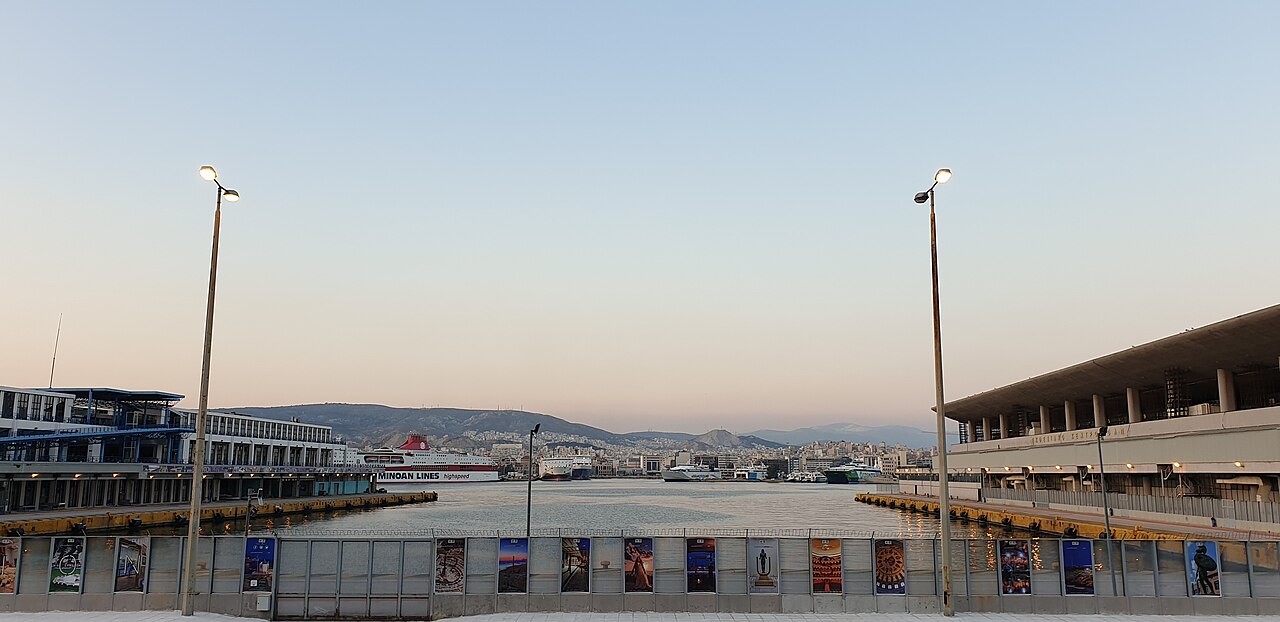
Lloyd’s Register has found that the Port of Piraeus remains at an early preparation stage for supplying alternative marine fuels, lagging behind Rotterdam, Antwerp-Bruges and Hamburg, according to the classification society’s Fuel for Thought: Ports report. The assessment, which evaluated more than 25 ports and port authorities worldwide, identifies a widening gap between shipowners’ orders for alternative-fuel-capable vessels and the pace of port infrastructure investment needed to supply them.
The report singles out Greece as a case study of that mismatch: while Greek shipowners rank among the world’s largest buyers of dual-fuel and alternative-fuel newbuildings, the country’s principal gateway port has yet to establish commercial bunkering operations for fuels beyond biofuel blends. Lloyd’s Register said Greece established a legislative framework for LNG bunkering as early as 2019, but found no evidence that a completed LNG bunkering operation has taken place in the country to date.
Piraeus Status: Biofuels Advance, LNG Still Pending
According to the report, alternative marine fuel supply in Greece currently relies mainly on biofuel blends, which can move through existing bunker infrastructure with limited modification. The Port of Piraeus continues preparing for broader bunkering capabilities but has not progressed to commercial-scale operations for LNG, methanol or ammonia.
Piraeus Port Authority has taken preparatory steps, including participation in industry and infrastructure initiatives aimed at positioning the port for the fuel transition, but Lloyd’s Register concluded that such steps do not yet demonstrate that commercial bunkering facilities are available. The gap places Piraeus behind Northern European peers such as Rotterdam, Antwerp-Bruges and Hamburg, which the report describes as having made the greatest progress toward multi-fuel bunkering capability in Europe.
Global Orderbook Outpaces Bunkering Supply
The wider Lloyd’s Register study found that nearly 2,000 alternative-fuel-capable vessels were on order as of January 2026, representing alternative-fuel ships at 47 percent of global orderbook tonnage by Clarksons Research figures. During 2025 alone, shipowners ordered 590 vessels capable of running on alternative fuels, totaling a combined 45.5 million gross tonnes.
Readiness varies sharply by fuel type: LNG bunkering was available at 222 ports as of January 2026, while methanol was actively offered at only 25 ports and commercial ammonia bunkering had been completed at just one port, Ulsan in South Korea, as of April 2026. Lloyd’s Register concluded that the vessel side of the energy transition is significantly further advanced than the shore side, urging owners to assess fuel availability along specific trade routes rather than rely on global readiness indicators.
Regulatory Pressure and Market Implications
The European Union’s FuelEU Maritime regulation, which entered into force in 2025, is adding pressure on carriers and ports alike to accelerate investment in cleaner bunkering options, increasing the urgency for Greek port infrastructure to catch up with shipowners’ newbuilding decisions. Greek shipowners control the world’s largest merchant fleet and have been among the most active orderers of dual-fuel tonnage in recent years, a mismatch the report frames as a strategic risk if Greek-flagged and Greek-operated vessels cannot bunker alternative fuels domestically.
Lloyd’s Register’s findings suggest that without coordinated investment across both the shipping and port sectors, the availability of alternative-fuel-capable vessels alone will not be sufficient to deliver the industry’s energy transition. For Piraeus, the report implies that further capital commitments and regulatory follow-through will be required before the port can match the bunkering capability already established at Rotterdam, Antwerp-Bruges and Hamburg.
Why it matters
The findings highlight a structural risk for Greek shipping: the country’s shipowners are among the world’s heaviest investors in alternative-fuel tonnage, yet its flagship port has not kept pace with the infrastructure needed to bunker that tonnage domestically. As FuelEU Maritime and other regulations tighten compliance timelines, a persistent gap between vessel capability and port readiness could push Greek-linked trade toward bunkering hubs in Northern Europe or Asia, with implications for competitiveness, fuel costs and Piraeus’s ambitions as a regional maritime hub.
Source: Greek City Times