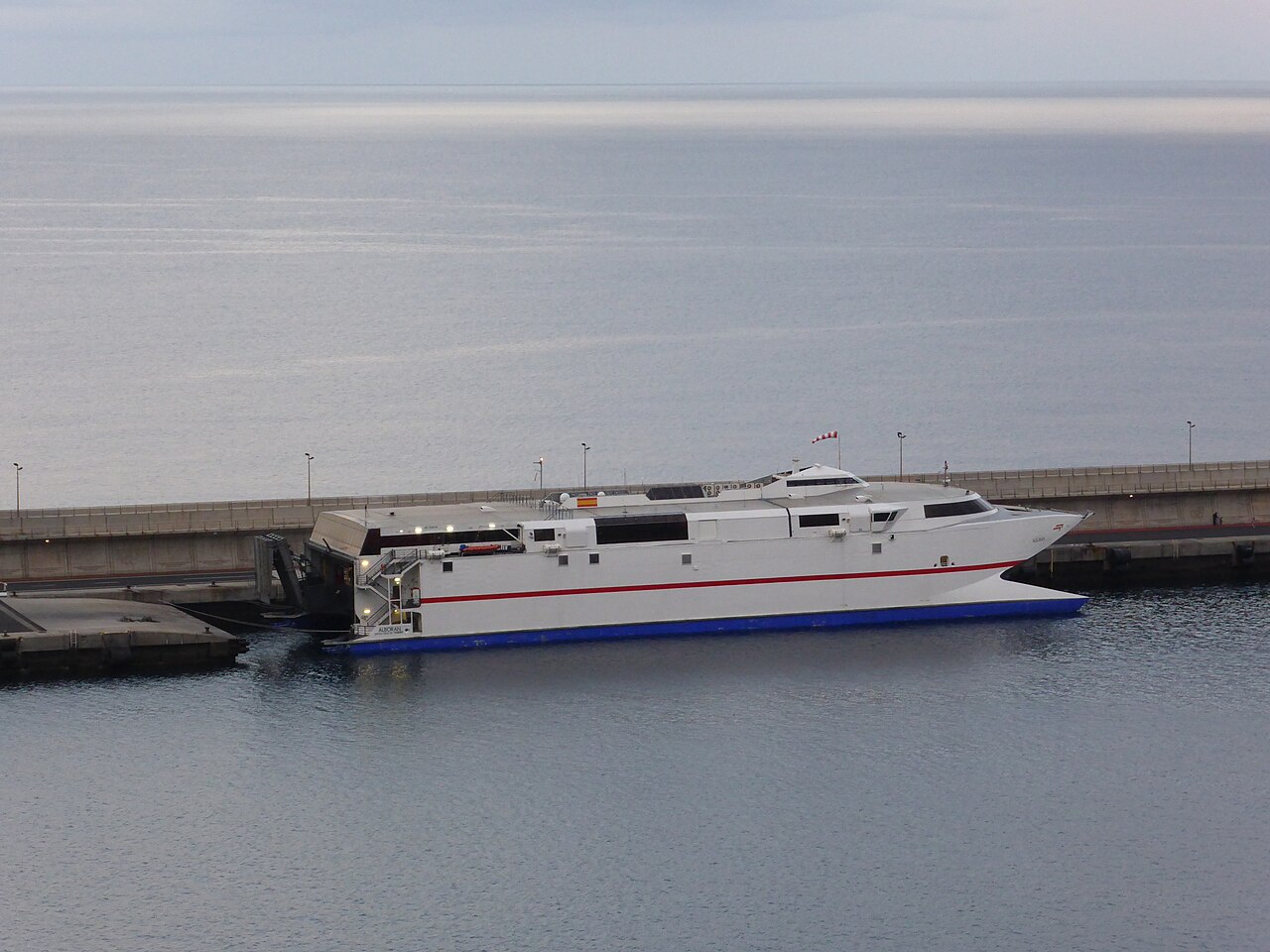
The China Zorrilla, a 130-metre battery-electric ferry built by Incat Tasmania in Hobart, Australia, has started commercial passenger service between Buenos Aires, Argentina, and Colonia, Uruguay, the shipbuilder announced on October 23, 2026. The vessel, delivered to South American operator Buquebus in September, completed its maiden commercial voyage following an official launch ceremony in Buenos Aires on October 21.
Powered entirely by batteries, the ship is described by Incat as the largest electric ship ever built, capable of carrying up to 2,100 passengers and 225 vehicles across the roughly 30-nautical-mile River Plate crossing. Its entry into revenue service marks the culmination of a project first announced in 2023 and caps years of construction, testing and a transoceanic delivery voyage from Tasmania to South America.
From LNG Concept to All-Electric Build
The vessel, known during construction as Hull 096, was originally conceived in 2019 as a dual-fuel ship burning LNG, with plans for Incat’s ninth vessel in the Buquebus fleet. Buquebus later asked Incat to replace the LNG powerplant with batteries and electric motors, a shift the shipbuilder’s chairman, Robert Clifford, said at the time the company was confident it could deliver.
The aluminium catamaran was launched at Incat’s Hobart shipyard on May 2, 2025, and underwent initial sea trials in December 2025 before further testing ahead of its delivery voyage. It was loaded onto the semi-submersible heavy-lift vessel Black Marlin for transport to South America in August 2026, an operation Incat described as one of the most complex maritime undertakings ever carried out in Tasmania.
Propulsion and Technical Specifications
The ship carries more than 250 tonnes of batteries in an energy storage system exceeding 40 megawatt-hours, which Incat has said is four times larger than any previous maritime battery installation. The system powers eight electrically driven Wärtsilä waterjets, giving the vessel a service speed of around 25 knots across the Buenos Aires-to-Colonia route.
Four separate battery rooms house thousands of lithium-ion battery units supplied through a partnership with Finnish technology group Wärtsilä, which also provided the propulsion system. The vessel’s interior includes a 2,300-square-metre duty-free retail deck, which Incat describes as the largest retail space fitted to any ferry in the world.
Industry Reaction and Fleet Expansion
Incat chairman Robert Clifford called the ship’s entry into commercial service a historic moment for the company, Tasmania and the wider maritime industry, saying hundreds of workers at the Hobart shipyard had overcome significant technical hurdles to complete the project. Wärtsilä Marine president Roger Holm has previously said ship electrification represents a key pathway for the ferry sector’s transition toward net-zero emissions.
The launch ceremony in Buenos Aires on October 21 was attended by Incat managing director Craig Clifford, Buquebus representatives and maritime authorities from both Argentina and Uruguay. Incat is also building three similarly sized battery-electric ferries for Danish operator Molslinjen and two smaller hybrid-electric vessels at its Hobart shipyard, signaling continued momentum for large-scale ferry electrification.
Why it matters
The China Zorrilla’s entry into service demonstrates that large-scale battery-electric propulsion is commercially viable for high-capacity, short-sea ferry routes, an achievement with implications for other busy crossings worldwide seeking to cut emissions. Its record-setting battery installation and the shift from an original LNG design underscore how fast energy-storage technology for shipping is maturing. The project also strengthens Tasmania’s position as a hub for advanced ferry construction, with Incat’s follow-on orders for Danish and other international operators suggesting growing global demand for zero-emission fast ferries.
Source: The Driven