This week’s news flow was split between an escalating war in the Gulf and an industry pressing ahead with record levels of investment regardless. Iran’s declaration that the Strait of Hormuz was closed to all commercial shipping, paired with the highest weekly tally of tanker attacks since the conflict began in February, pushed transits through the chokepoint to a fraction of pre-war levels and produced tangible fallout, from an oil spill off the UAE coast to Iraq’s cautious return to Gulf shipping and fresh US sanctions on a Piraeus law firm.
Away from the Gulf, shipowners and investors kept spending. MSC and HMM pushed the global containership orderbook to a record, International Seaways struck a $370 million VLCC deal, A.P. Moller Capital added a seventh ports acquisition since August, and the Panama Canal posted record annual tonnage. Alongside these capacity and consolidation stories, the industry marked new fuel-transition milestones even as two unrelated vessel casualties, a mid-Atlantic container ship explosion and an Indonesian ferry fire, underscored that safety risks persist across very different parts of the fleet.
Iran’s War Chokes the Strait of Hormuz
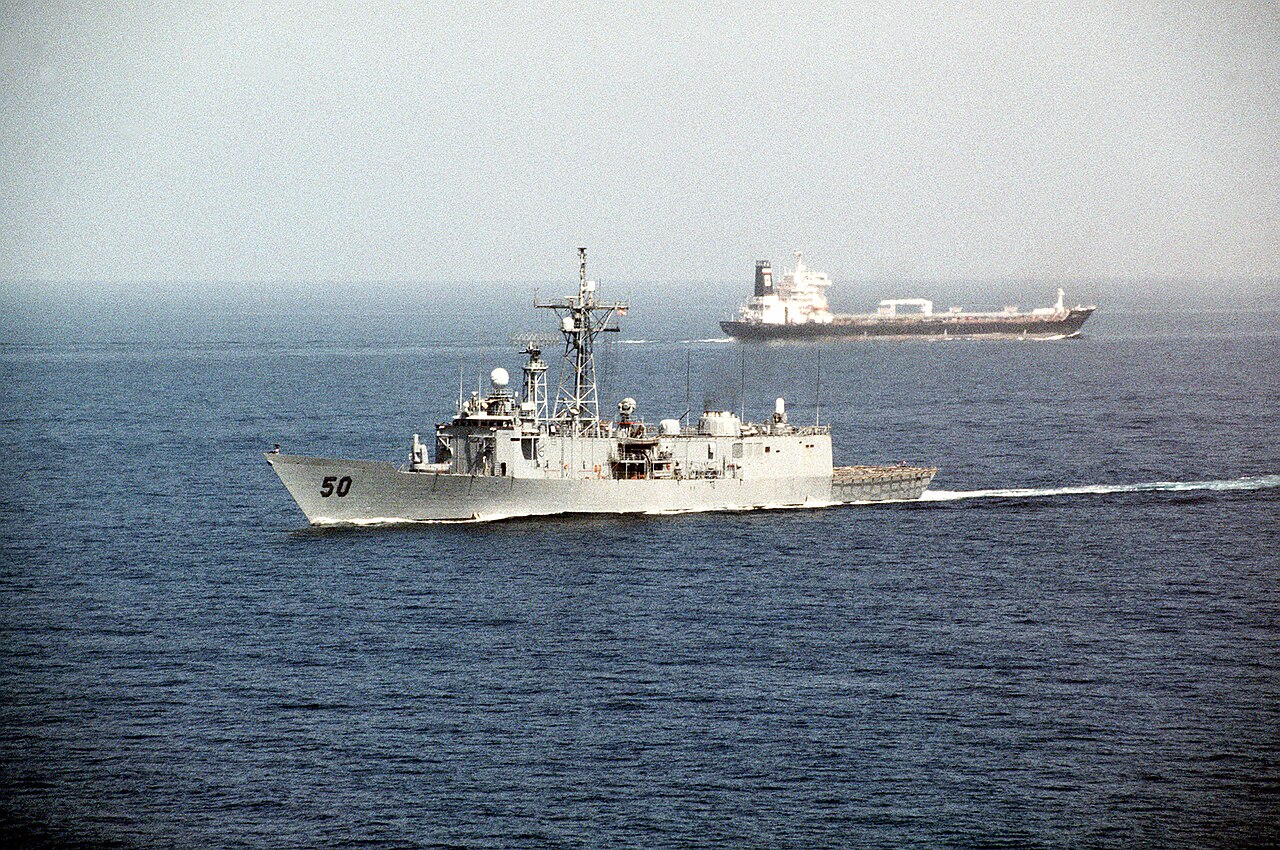
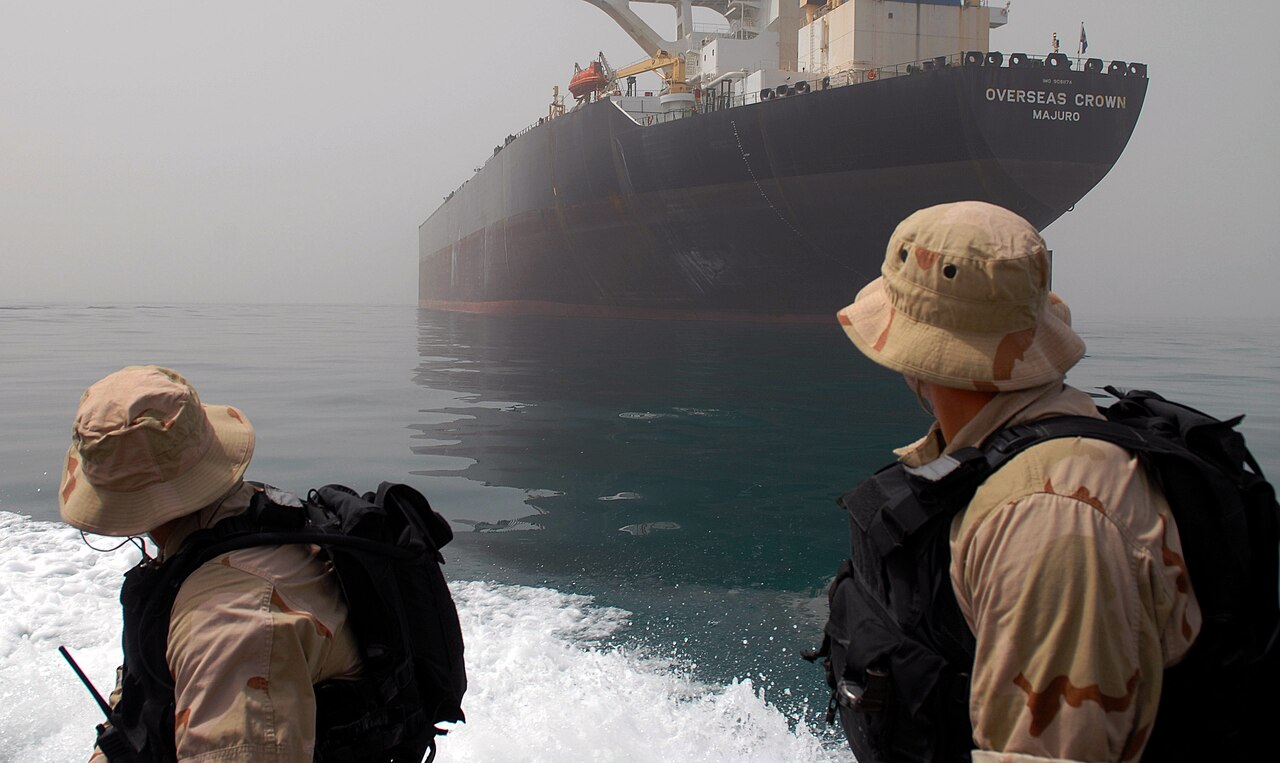
The week’s defining event was the IRGC’s declaration on October 17 that the Strait of Hormuz was closed to vessels of all nationalities, the most explicit assertion yet in a campaign that has driven tanker attacks to their highest weekly total since the US-Israel war on Iran began in February. Eleven tankers were struck in the week ending October 4, five more the following week, and IMF PortWatch recorded just two vessel crossings on October 11 against a pre-crisis baseline of roughly 85 a day.
The human and environmental cost of that campaign became visible this week as the UAE confirmed an oil spill off Umm Al Quwain traced to the tanker GEM NO.2, struck by a projectile near Hormuz on October 9, forcing beach closures after days of residents reporting oil-like odours. Against that backdrop, Iraq relaunched commercial shipping through the Persian Gulf after a 50-year hiatus, with the vessel Basrah’s departure from Jebel Ali delayed by nearly a week amid the escalating attacks.
The conflict’s reach extended into Western enforcement and alternative routing. The US Treasury sanctioned the Piraeus-based law firm Karnakis and Karnakis and subpoenaed an unnamed Greek bank over alleged support for Iran’s shadow fleet, while separately, data compiled by Norway’s CHNL showed Northern Sea Route transits have already surpassed last year’s full-season record, with disruption at Hormuz, Suez and the Black Sea cited as a key driver pushing traffic north.
Geopolitical Friction Spreads Beyond the Gulf
Russia escalated its rhetoric over Baltic Sea enforcement this week, with Moscow’s Foreign Ministry calling EU tanker detentions ‘hostile provocations’ and warning of retaliation, as Denmark, Germany and Finland tighten inspections of shadow-fleet vessels moving sanctioned Russian crude.
In the eastern Mediterranean, Greece’s shipping minister Vasilis Kikilias vowed no retreat on sovereign maritime rights after Libya’s eastern-based parliament revived the 2019 Turkey-Libya maritime memorandum that Greece, Cyprus, Egypt and the EU say violates international law, reopening a dispute over gas-rich waters.
A third front showed signs of easing rather than escalating: Washington formally proposed extending the suspension of China-linked port fees to January 2027, converting September’s verbal Busan Agreement understanding into enforceable policy and removing near-term uncertainty for carriers operating Chinese-built tonnage.
Record Orders and Deals Reshape Fleet Ownership
Newbuilding momentum hit a new high as MSC and HMM pushed the global containership orderbook to a record 16.2 million TEU, with MSC’s 20-ship order at Hengli Heavy Industries lifting its own ultra-large orderbook to 62 vessels and HMM committing roughly $1.5 billion to LNG dual-fuel tonnage.
In tankers, International Seaways agreed to acquire VLCC owner Bruton for approximately $370 million, adding four crude carriers without joining lengthening Chinese and South Korean shipyard queues, against a backdrop of spot earnings that have more than doubled year over year.
Greece’s reliance on that same Chinese shipbuilding capacity framed Vasilis Kikilias’s meeting with China’s transport minister in Shanghai, where he proposed a role for Greek marine equipment manufacturers in vessels being built for Greek owners, part of a wider diplomatic push also involving Cyprus.
Ports, Fuel Transition and Safety at Sea
Port investment and infrastructure news was active across several geographies. Piraeus container terminals posted 15.3% September growth ahead of the first Suez-routed call expected in late October, while A.P. Moller Capital agreed to acquire Singapore’s Portek International from Mitsui in its third ports deal since August. The Panama Canal reported record FY2026 tonnage of 521 million tons and reinstated last-minute booking as drought-era restrictions ease, and Sierra Leone launched a Chinese-backed national shipping line, SLOSCO, targeting a 50-vessel fleet.
On fuel transition, Singapore completed the world’s largest ethanol bunkering operation on the Maersk Halifax, the World Shipping Council reported the dual-fuel containership and car carrier fleet has topped 500 vessels with over $200 billion invested, and Argentina-Uruguay saw the world’s largest battery-electric ship, China Zorrilla, enter commercial service.
Two unrelated casualties underlined persistent safety risk: the Hapag-Lloyd-chartered Espirito Santos Express was abandoned after an Atlantic explosion and fire, exposing cargo interests across Hapag-Lloyd, MSC and ONE, while in Indonesia the ferry KMP Batumandi caught fire near Merak Port, with all aboard rescued but six injured, the latest in a string of regional ferry casualties.
What to watch next week
The most consequential variable remains Hormuz: Iran’s foreign minister has floated a seven-day reopening plan conditional on US concessions, while Tehran’s parliament speaker insists the strait stays shut until seven conditions are met, so any diplomatic movement, or further attacks, will shape oil markets and routing decisions industry-wide. Watch also whether Iraq’s Basrah completes further sailings safely, whether the EU-Russia Baltic standoff produces an actual vessel seizure rather than just rhetoric, and whether Piraeus sees its first confirmed Suez-routed call in late October as a signal of broader Red Sea normalization.
On the commercial side, the MSC/HMM orderbook surge raises the question of oversupply once Cape of Good Hope diversions potentially unwind in 2027, while the IMO’s MEPC session from November 30 will be pivotal for whether the dual-fuel investment wave translates into real emissions cuts. The USTR’s China port-fee extension through January 9, 2027 sets the next checkpoint for the broader US-China trade and shipbuilding truce.